Learn Bebop
Swingfeel/Phrasing/Accents
Swingfeel
It doesn’t matter how creative and virtuous your lines are if they don’t have the right feel. It‘s not possible to write this feel down in a standard notation way.
Normally we notate swing feel with a quarter triplet followed by a eighthnote triplet.
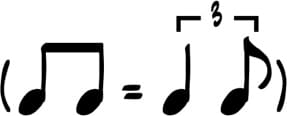
But if we listen carefully to jazz greats, we realize that they play more in a straight way against the triplet feel combined with a more „laid back“ feel.
So keep this in mind when you listen to the greats of bebop and work on imitating this feel.
Accents
An also very important point is the use of certain kinds of accents in your playing.
One of the most common ways to set accents to your lines is by accenting the upbeat. Especially in slower tempos bebop players tend to accent most oft he upbeats. But be careful – an accent doesn’t mean that you play the note to short. The Upbeats are strong and long. The connection between the notes should be played very legato.

Phrasing
Phrasing describes the art of shaping a melodic line. Accents are also a tool of phrasing. Furthermore bebop players like to use legato techniques to give their lines more smoothness.
Very common is to use legato techniques from the accented upbeat to the downbeat whenever it is possible.

Playing the arpeggio
The next step to start your journey in creating bebop lines are to work on your arpeggios. Bebop players are not playing simply scale material. They playing out the chord changes and shape them in different ways.
The first ability you need ist o play the arpeggios over every chord change.
The most common chord changes are:
Minor7, Dominant7 and Major7.
In this quick guide we only want to talk about this kind of chord changes. But to use the material and techniques on other chord changes (Minor Progressions etc.) is also useable.
To know these arpeggio patterns among the fretboard is absolutely essential if you want to play bebop.
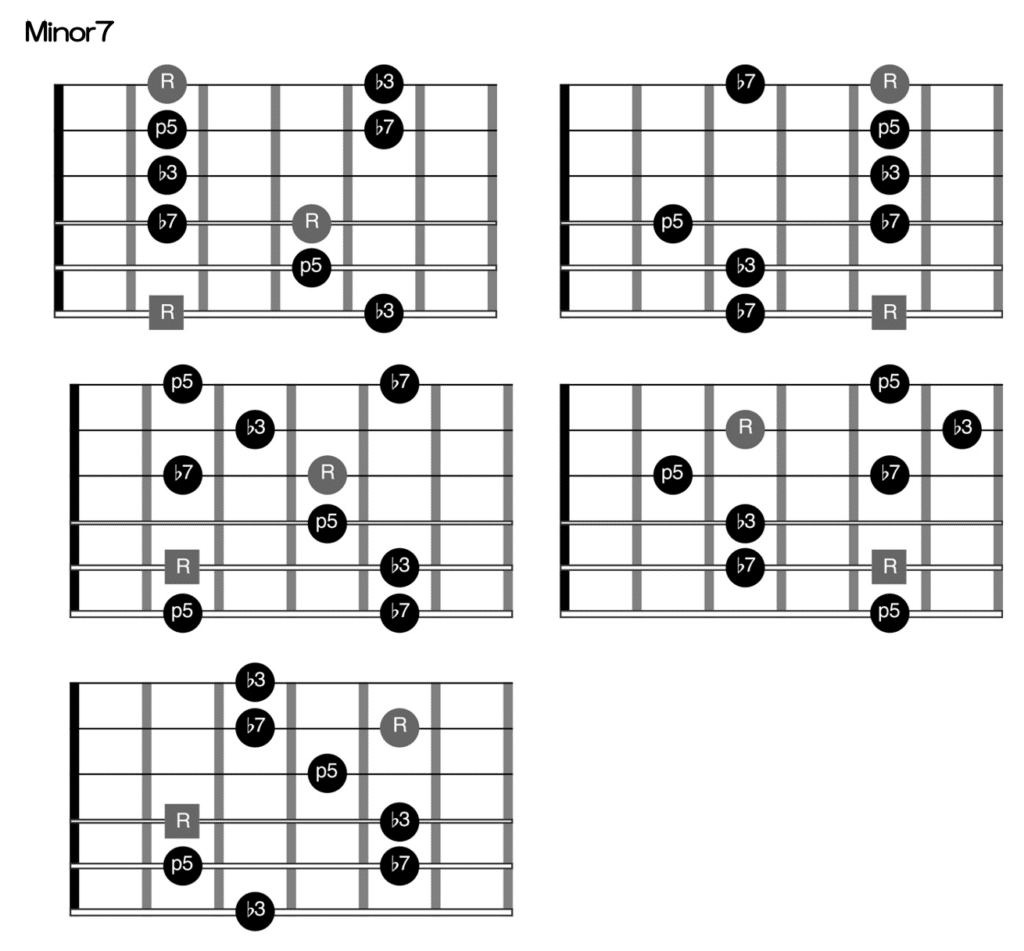
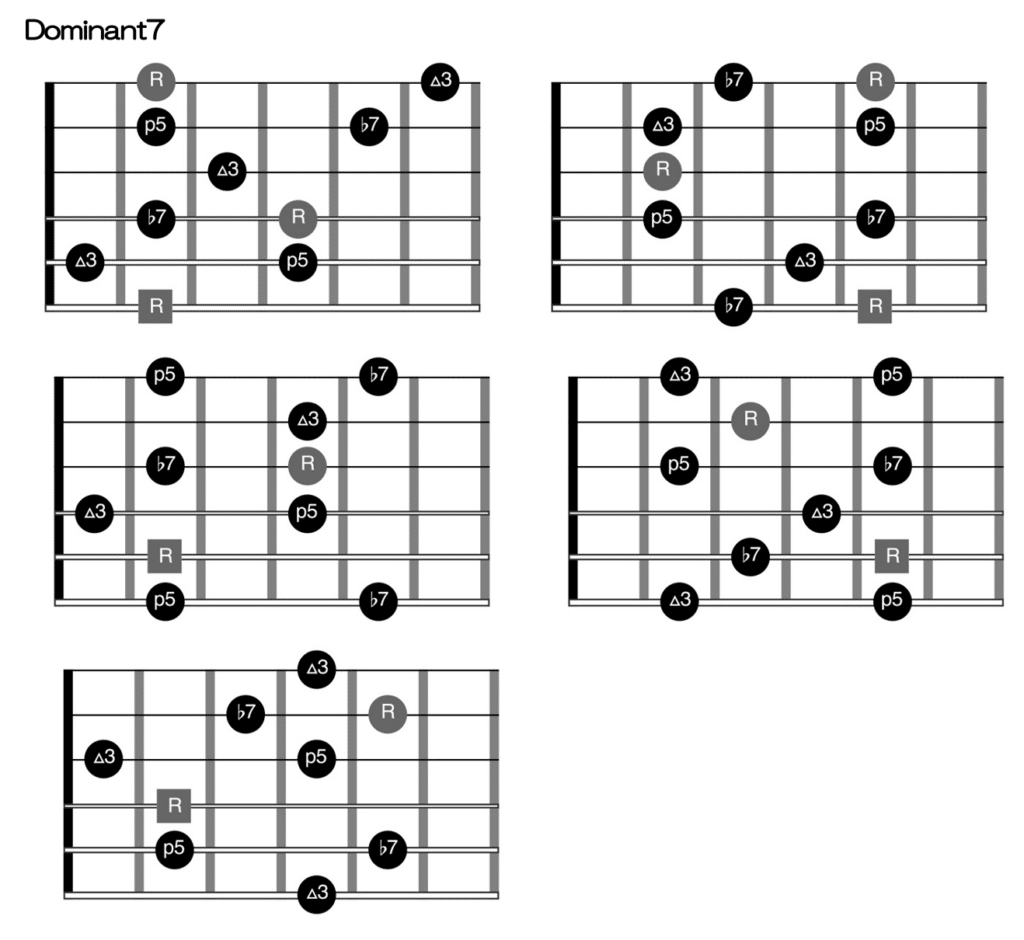
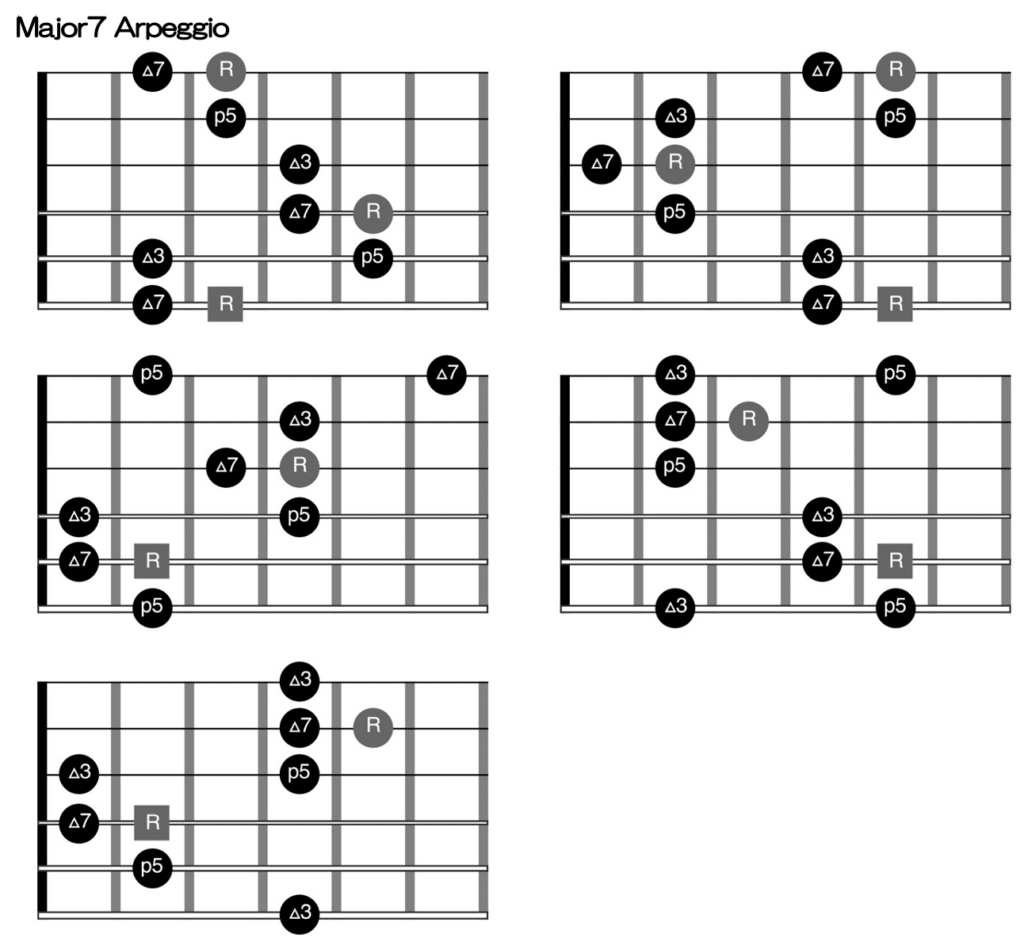
Connecting the Guidetones
If you are familiar with the different arpeggio patterns on your fretboard, it’s time to work on connecting the different chord types.
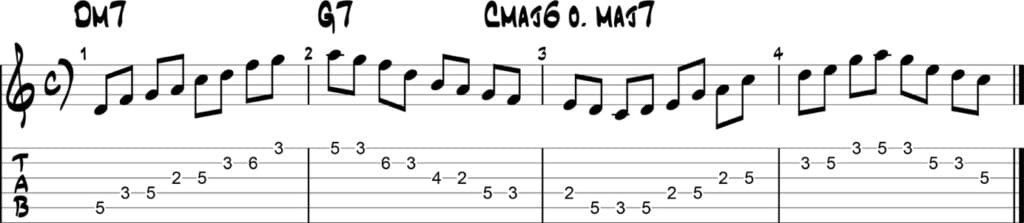
The most common chord progression in jazz and bebop is the major 2-5-1 progression. In the key of C, the progressions would look like:
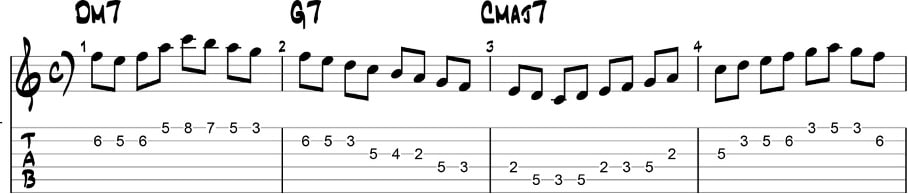
| Dm7 | G7 | Cmaj7 | % |
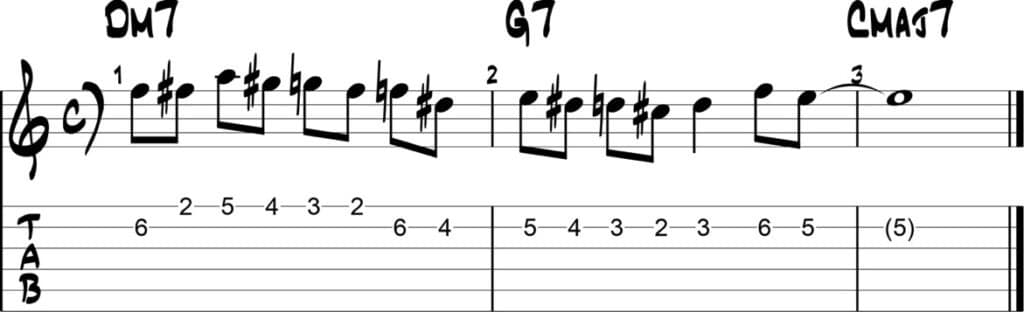
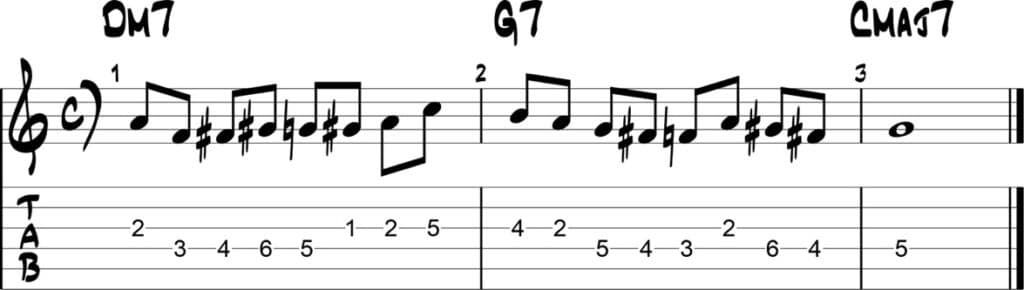
The best exercise to work on your guidetones and the connection between them, is to play an arpeggio in constantly eighthnotes. On every chord change you try to play the next closest note of the new arpeggio.
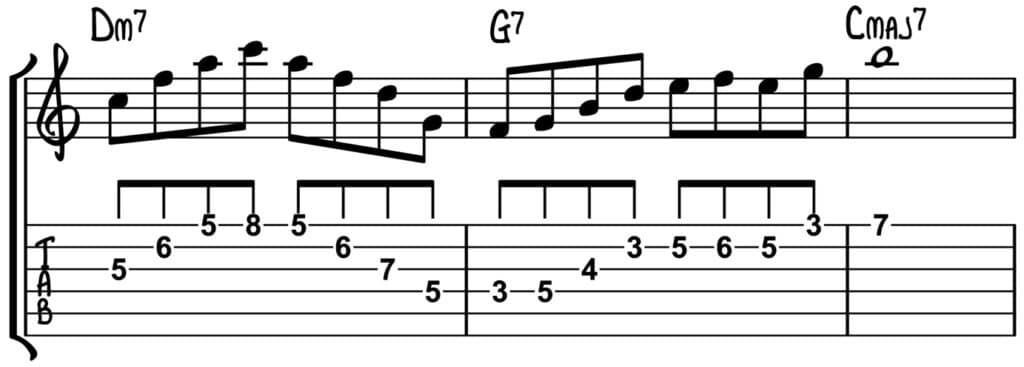
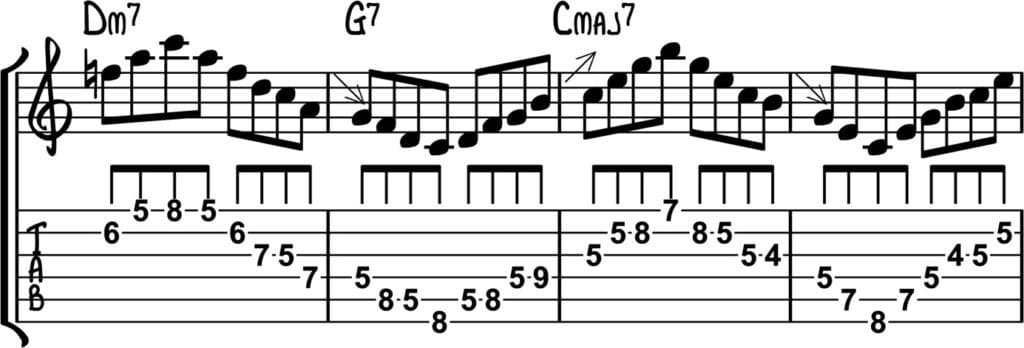
Do this exercise for every position and pattern on your fretboard. If you are advanced with these exercises put some restrictions in your filter. The first restriction is to only connect the changes with the 3rd of the chord.
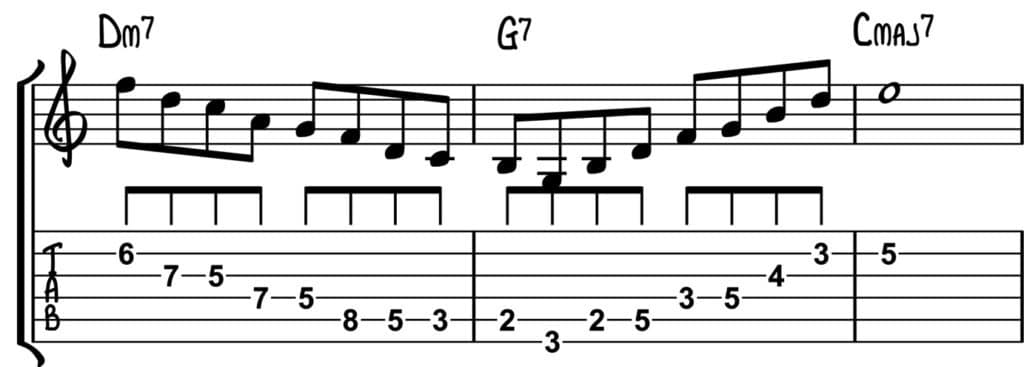
After that you connect the chord changes only with the seventh of the chord.
Mixing both – thirds and seventh to create a perfect voice leading.
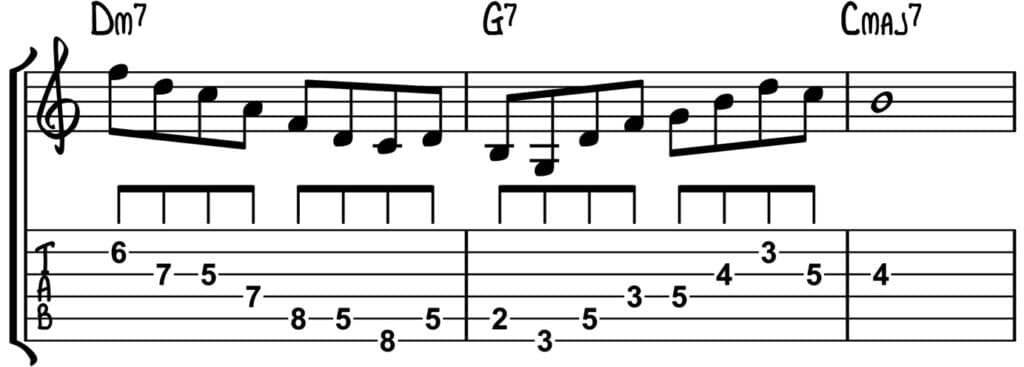
I know that these kinds of exercises can be a little bit static and frustrating by the beginning. Bebop is not an easy language to learn. It’s ok to put a backing track on and just noodling around but I believe to master this discipline it’s the best way to come step by step the bebop sound you are looking for.
So be sure that you can do this exercise. It’s ok to skip tot he next chapter, but go back to this exercise if you struggling with voice leading.
Expand to Pentatonic
Some people think the pentatonic is only a tool for beginners in improvisation but it’s a basic tool for bebop musicians to outline the chord changes.
For a bebop musician a pentatonic is more an arpeggio with an added note.
For example a D-Minor Pentatonic is a Minor7 Arpeggio + the 11th of the chord.
We can expand all our arpeggio patterns with one note to make a pentatonic out of them. The pentatonic structure will help us to creating great lines in the following chapters.
For the 2nd degree (Dm7) we expand the Minor7 Arpeggio to a D-Minor Pentatonic
For the 5th degree (G7), we expand our Dominant7 Arpeggio to an G9 Arpeggio – also known as G – Dominant Pentatonic.
For the 1st degree (Cmaj7) we change our Major7 Arpeggio to a C Major Pentatonic – Don’t worry the major7 is also useable can be added in the following chapters. So it’s no problem to combine Major7 Arpeggio and Major Pentatonic.
Dm7 à D Minor Pentatonic
G7 à G Dominant Pentatonic
Cmaj7 à C Major Pentatonic / major 7 can be added
Why we do this?
The pentatonic gives us the possiblility to add option notes to our chord tones which also can be used on strong beats. There is no need to take so much focus on setting chord tones on the strong beats over the Dm7 chord. The chord on the second degree has no avoid notes – but it is good to work on this discipline for the voice leading and the control over your note choices. Furthermore you can use the minor pentatonic also for the other minor degrees like the sixth and third degree of the major scale. In the following chapters we will talk more about the second degree and the use of the full dorian scale over it.
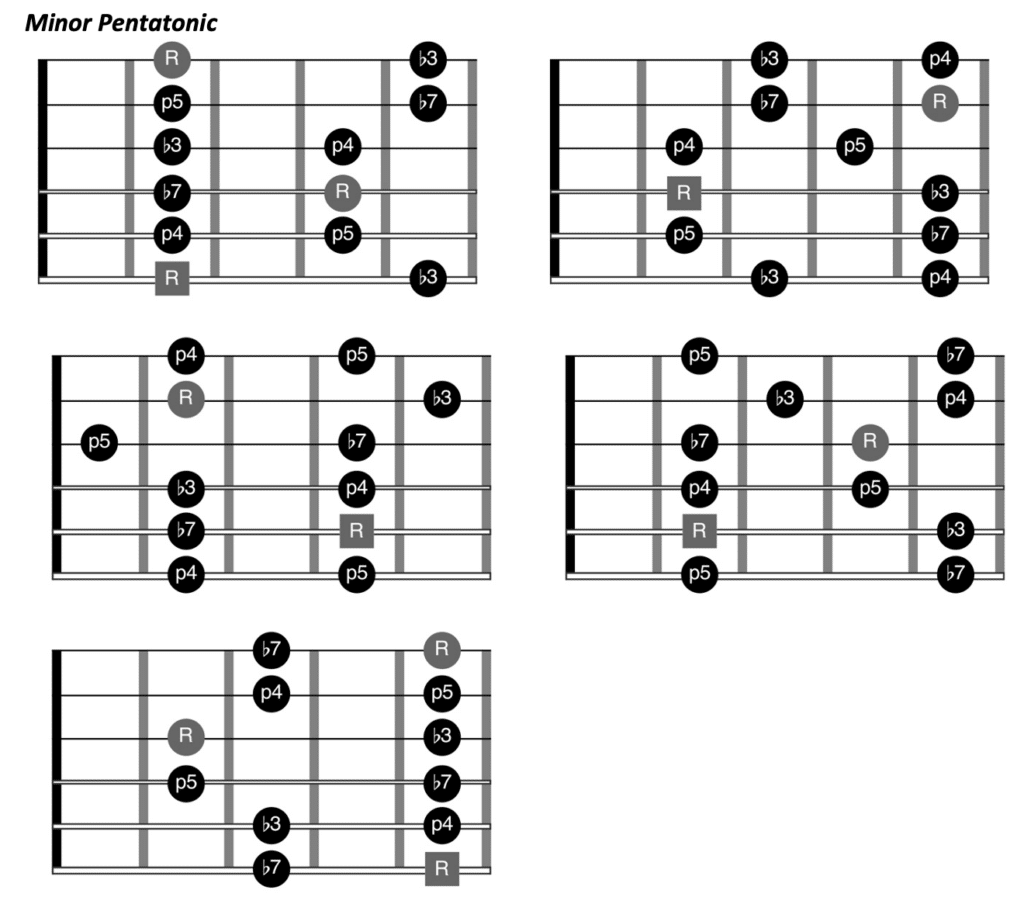
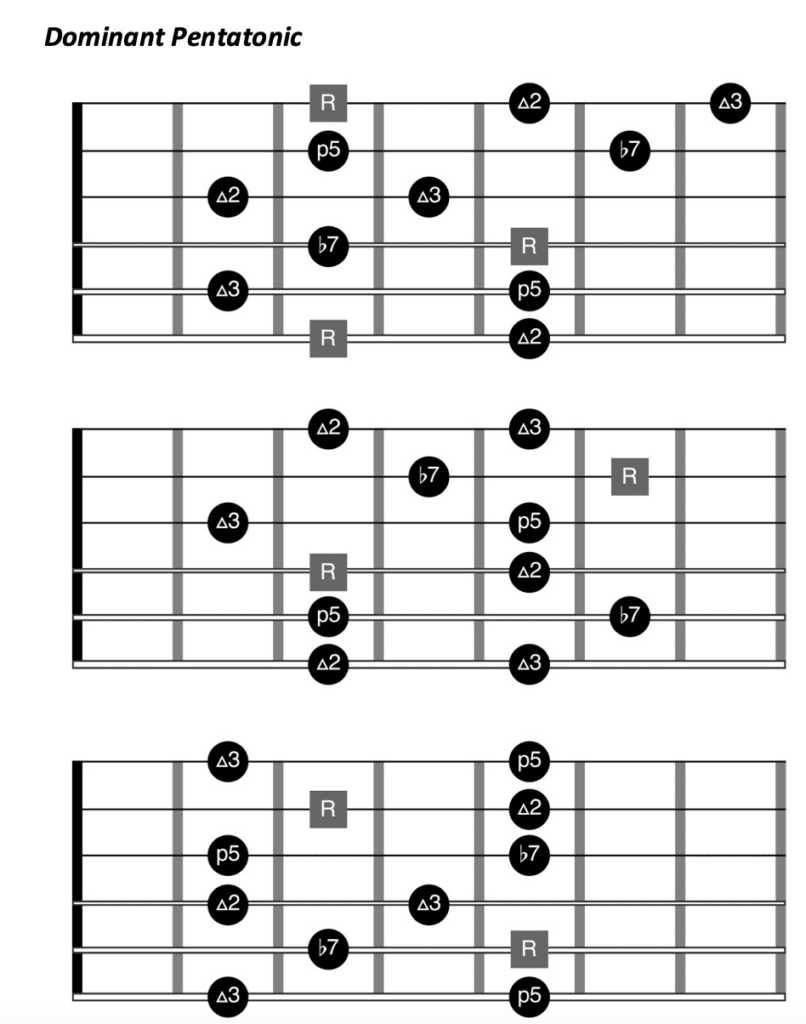
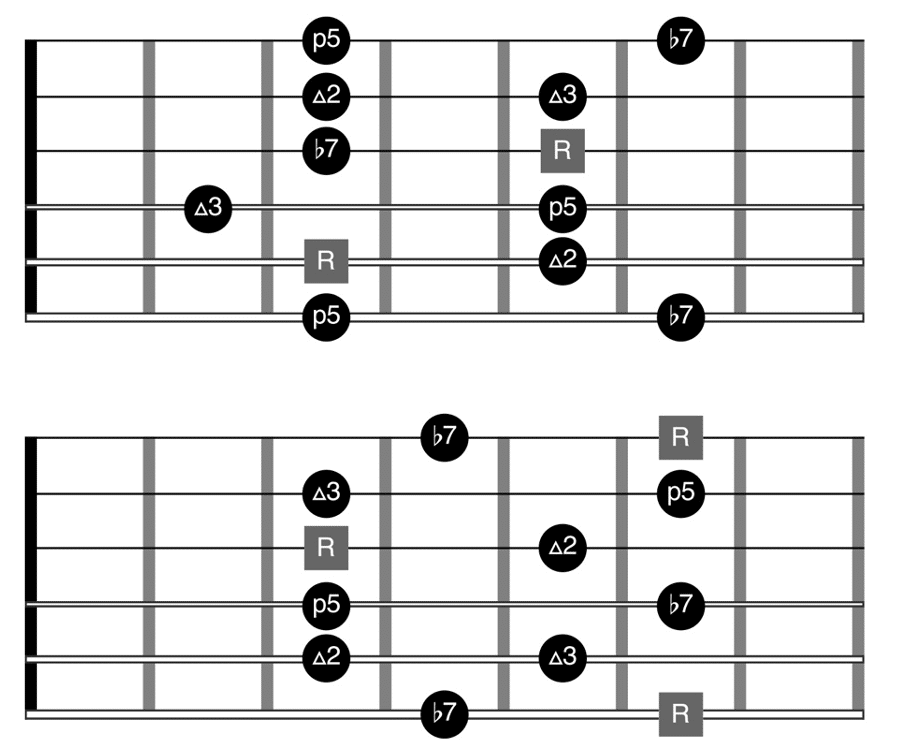
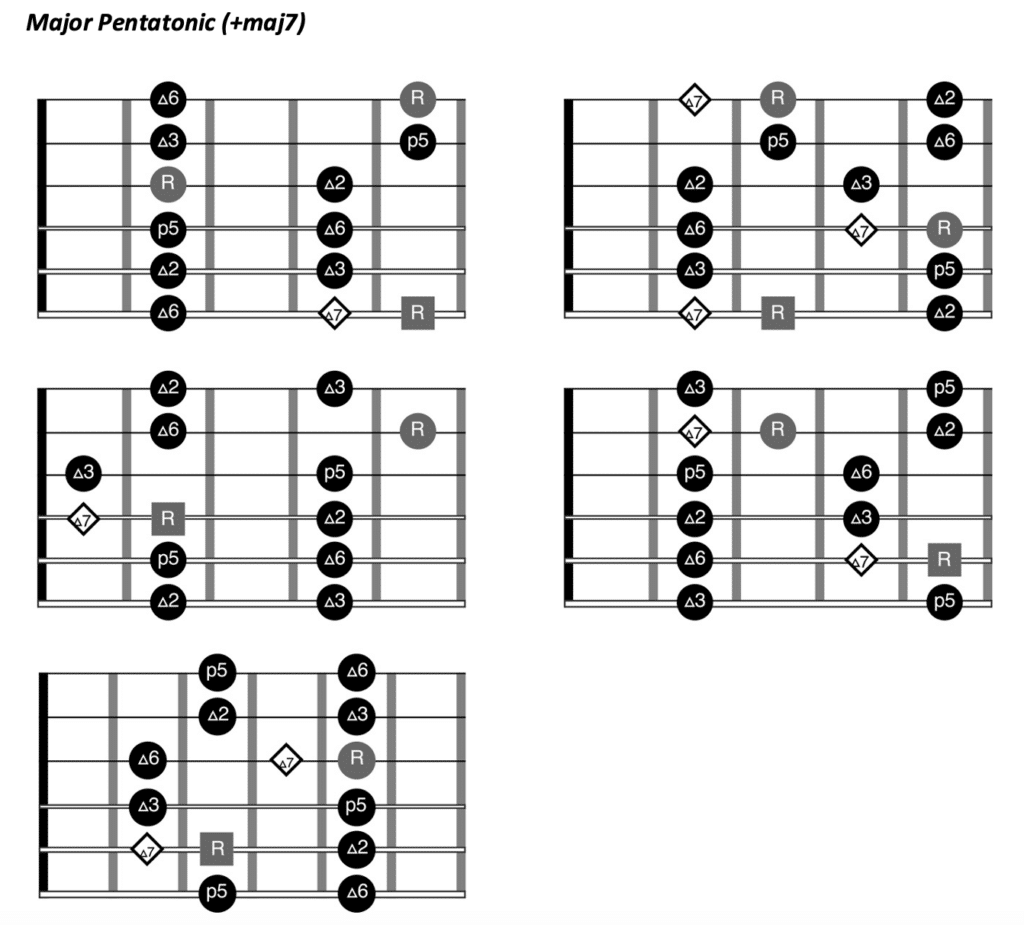
It is advisable to work with this pentatonic patterns in the same way you did it with the arpeggios. So play the patterns over the changes and change the pentatonic everytime the chord change.
Use all scale notes
Congratulation! After this kind of self torture you are ready to use all the other notes of our major scale. The reason we focused first oft the arpeggio and the pentatonic ist that we want to take stable notes on the strong beats and scale notes on the upbeat for our lines.
Jazz musicians like to label the used scale from the root note of the actual played chord change.
For the chord scale on the second degree, fifth degree and first degree we like to label it like dorian, mixolydian and ionian scale.
Dm7 à D Dorian Scale
G7 à G Mixolydian Scale
Cmaj7 à C Ionian Scale
Keep in mind that the use of this scale names has not much to do with modal playing like it happens in nonfunctional tunes – it is still a progression with a tonal centrum of C-Major scale.
Dorian Scale
I already told you, that the second degree (Dm7) of our progression has no avoid notes. Every note can be placed on strong beats like 1, 2, 3, 4. In the first view we don’t see the importance to learn the arpeggio or pentatonic scale for this degree. But you have to see that it help you to bring a nice voice leading when a chord change happens. It wasn’t a waste of time to learn the arpeggio and pentatonic for the second degree. Furthermore you can use the arpeggio and pentatonic also for other minor chords – for example on the third and sixth degree.
It’s important to see every scale concerning to the given chord. I tell my students to play the dorian scale over a one chord Vamp to come into the sound of the scale.
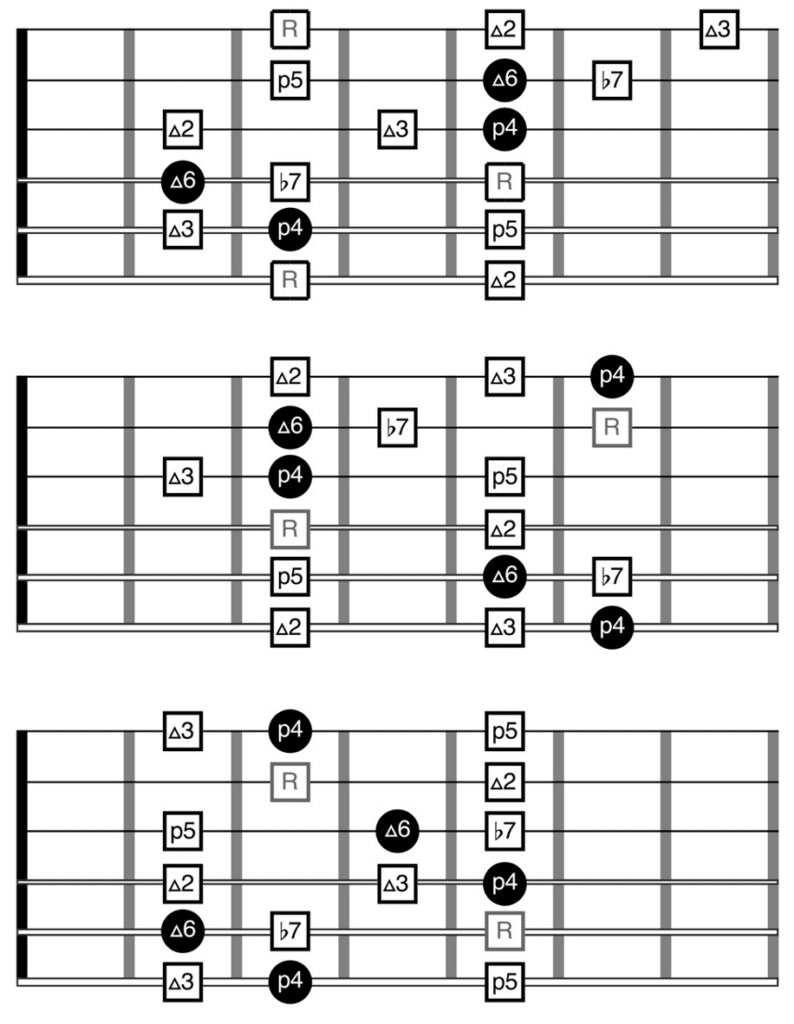
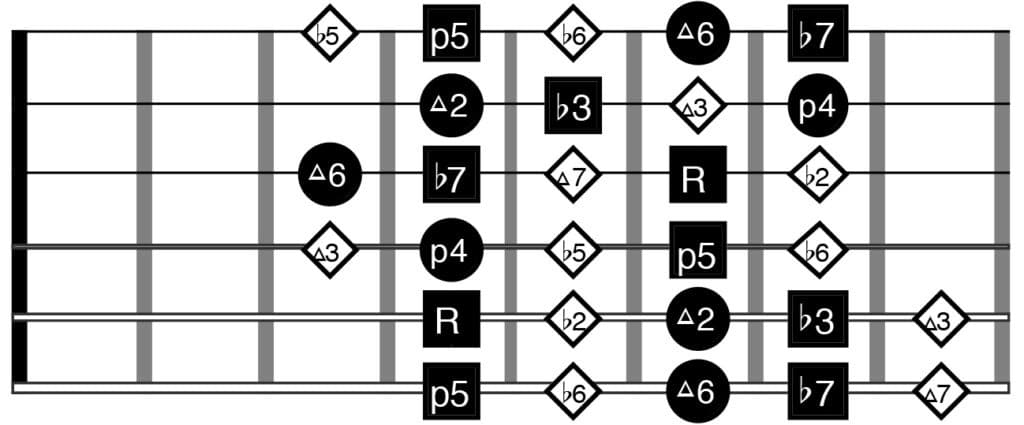
The minor pentatonic are in white squares, the scale notes are black circles.
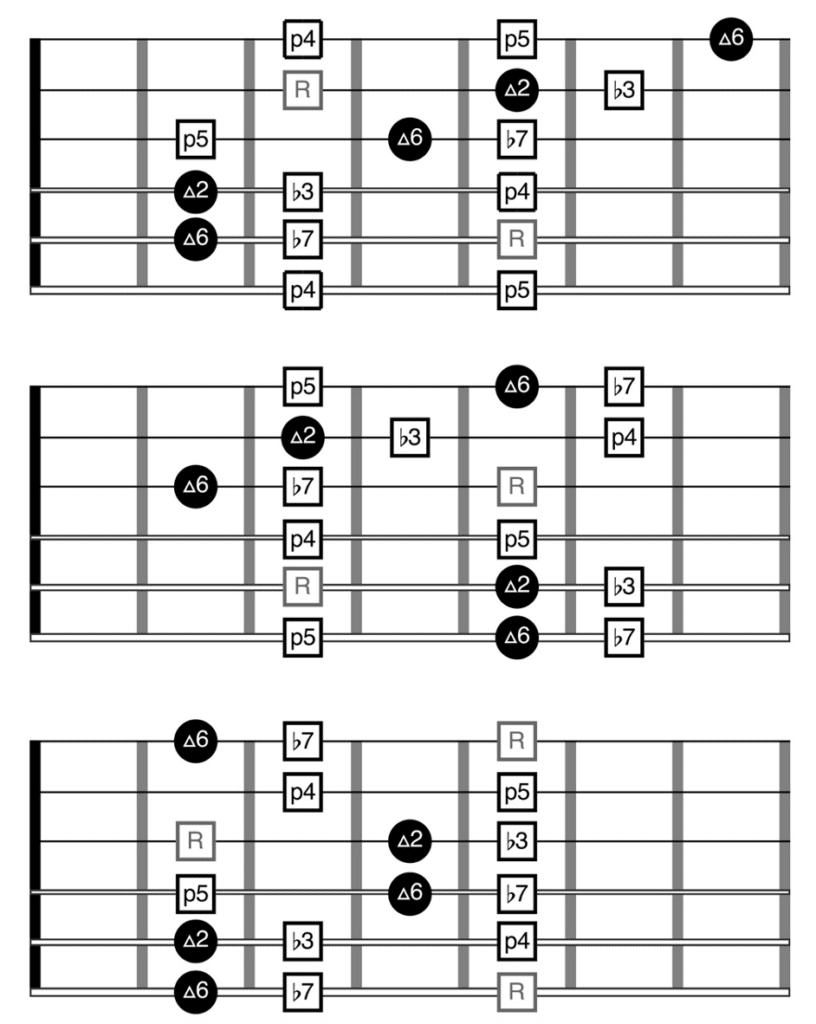
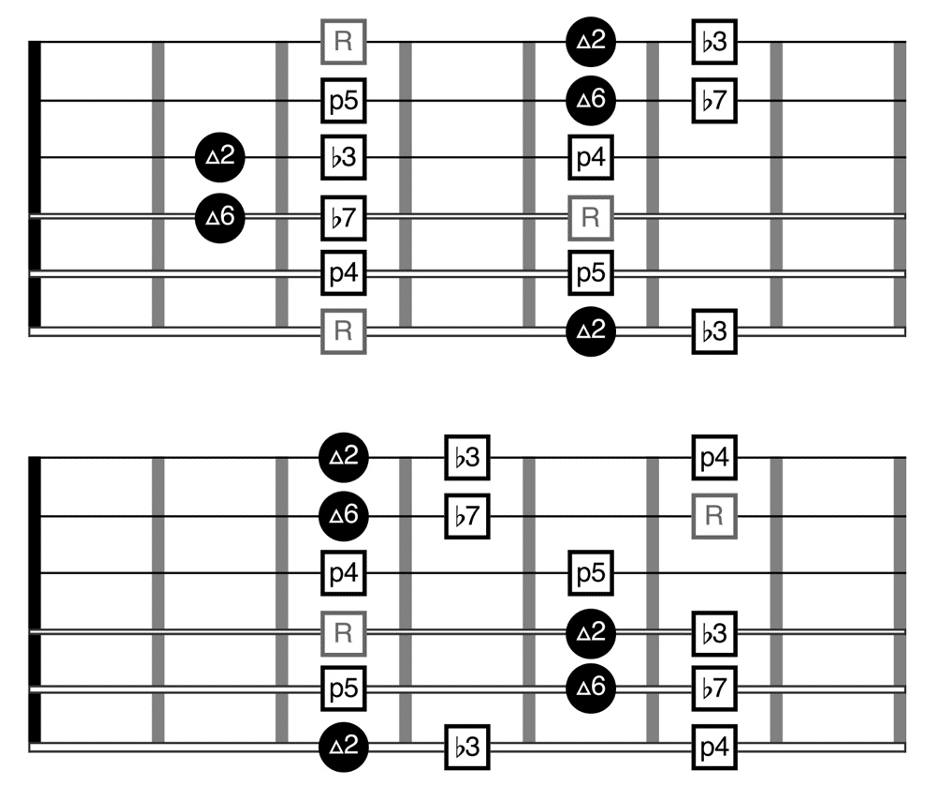
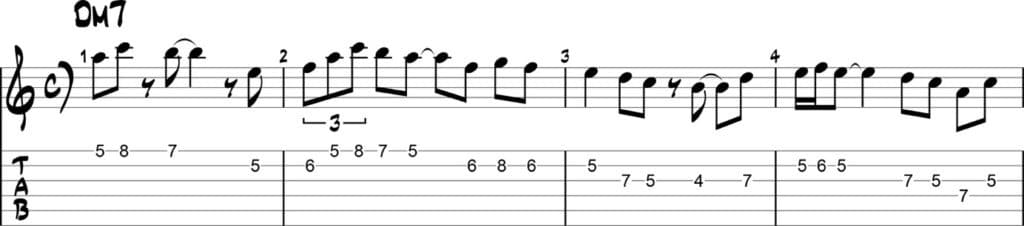
While you jamming with these scales, try to know when you point out a chord tone and when you point out a scale tone. The scale tones give the dorian flavor, the chord tones are important for voice leading and connect everything to the given chord change.
Mixolydian Scale
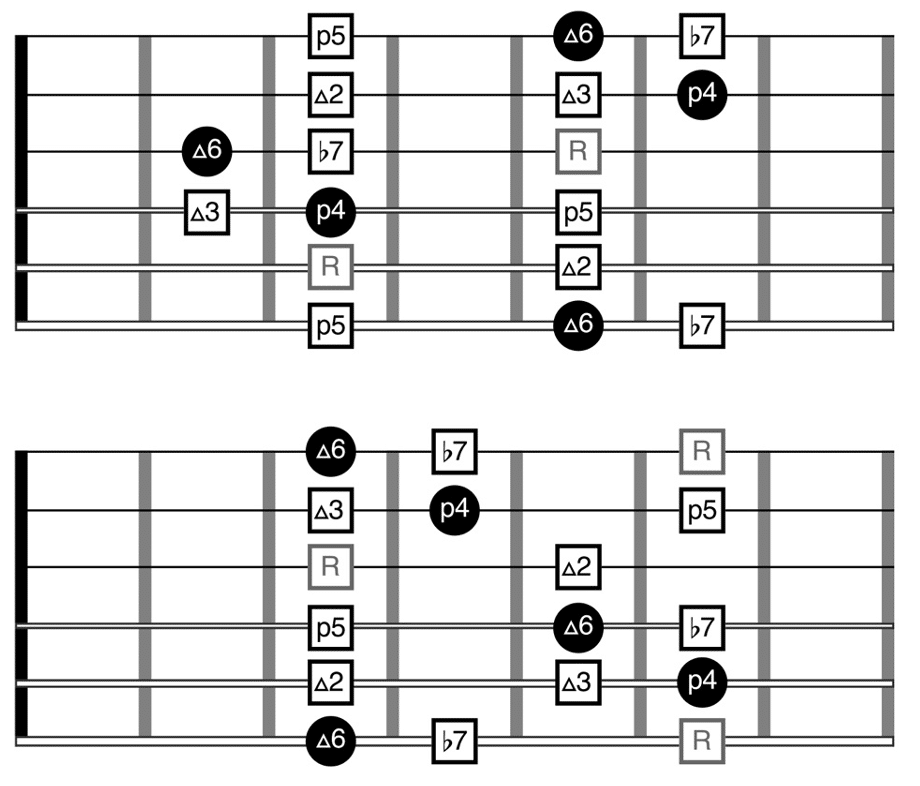
For the fifth degree we can use the mixolydian scale – simply a major scale played from the fifth degree.
The scale adds a fourth and a sixth to our Dominant pentatonic scale. For the mixolydian scale we try to keep our pentatonic notes on the strong beats and add the scale notes between them on the offbeats.
Ionian Scale
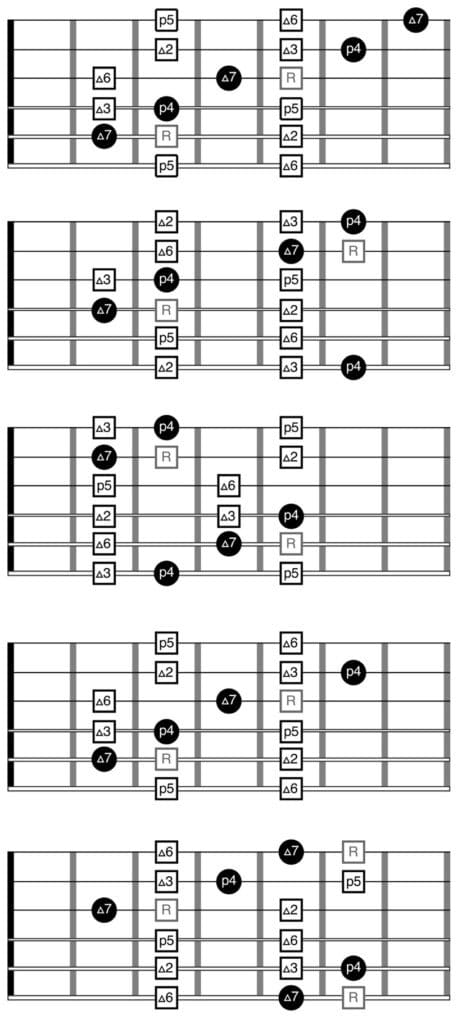
Or simply called the major scale. For the first degree of our chord progression we can use our well known diatonic major scale. But we keep the major pentatonic under our finger and put the scale notes only on upbeats and pentatonic notes on the downbeats.
Put in chromatic
Chromatic is the glue which transforms your lines to jazzlines.
Chromatic notes are notes from a half-step below or a half-step above a target note.
We differentiate 3 designations – the target note, the approach note and the passing note.
The target note is the note we want to arrive with the chromatic approach note. The approach note is the note which approaches the targetnote a halfstep below or above. Passing notes are chromatic notes between two chord or scale notes.
The first step you can make is to put chromatic notes between your chord and scale notes. Put the chromatic notes on the upbeat and play chord and scale notes on the downbeat.
Chromatic for the dorian scale
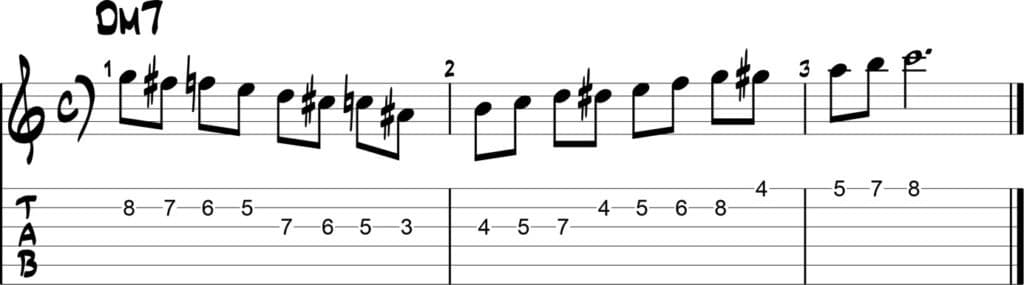
To put chromatic over the second degree you can simply put chromatic notes between chord and scale notes on the upbeat.
The Dominant Bebop Scale
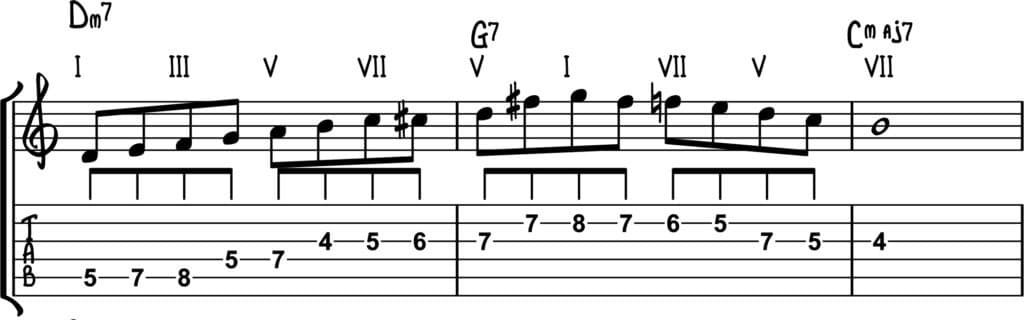
The Dominant Bebop Scale is a tool for jazz musicians to outline the 5th degree and put the chordtones on the downbeats.
The bebop scale is more a system than a scale which shows the musician the possibility of chromatic notes between the chord tones.
Look at the following example and you see how the chord tones are set on the downbeat.
You already did the first step! The Dominant Bebop Scale is based on a Dominant Pentatonic with added scale notes and 2 chromatic notes.

With this G-Dominant Bebop Scale you can put the G-Dominant Pentatonic notes on every downbeat while you playing eighthnote-lines.
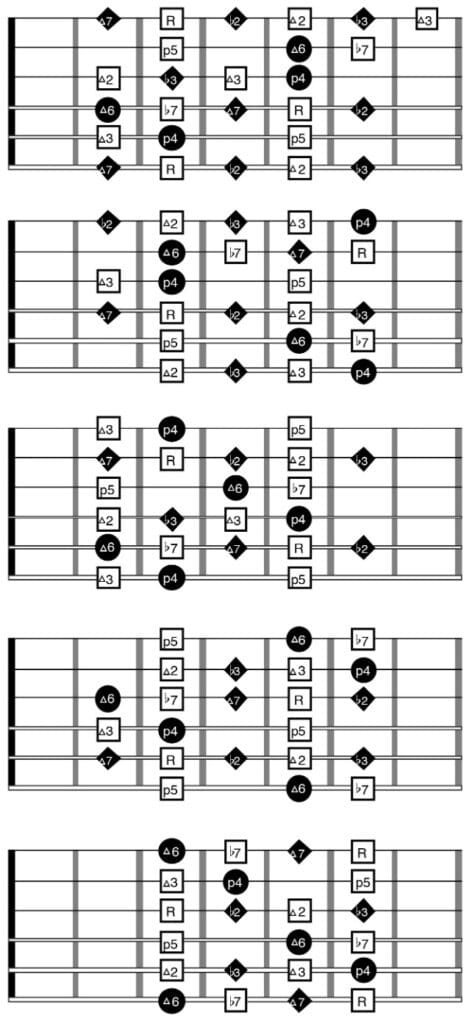
The white squares show you the dominant pentatonic notes. The rule is to put the white squares only on downbeats. The chromatic notes of the Bebop Dominant Scale help you.
The following example shows you the downward played G-Bebop scale. Followed by an example to show you how practical lines can be created with the bebop scale over a G7 chord.
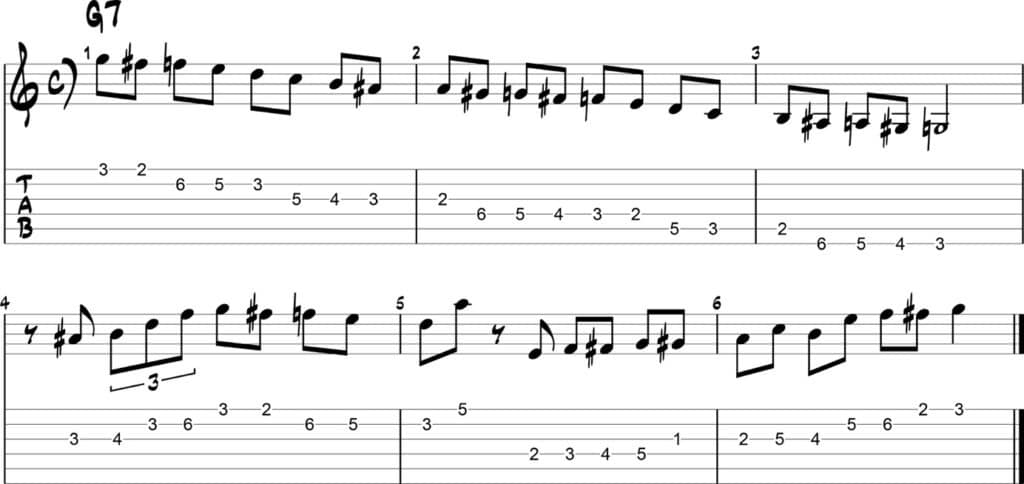
Bebop musicians take much focus on the dominant chord. They play the dominant Bebop scale also over the second degree (Dm7) very often to create longer lines with the scale.
The Major Bebop Scale
Also the first degree has some avoid notes. The fourth is a note which shouldn’t be used as a long target note or as a note in your voice leading. The reason is, that the fourth want to resolve in the major third of the key.
This is the main reason we took focus on the Major Pentatonic (+maj7) over the first degree. A tune often ends on a major6 chord, so it’s better not to land on the major7 in these cases.
The major bebop scale but also some chromatic notes in the major scale to give you the possibility to make eighthnote lines with chord notes on the downbeats.
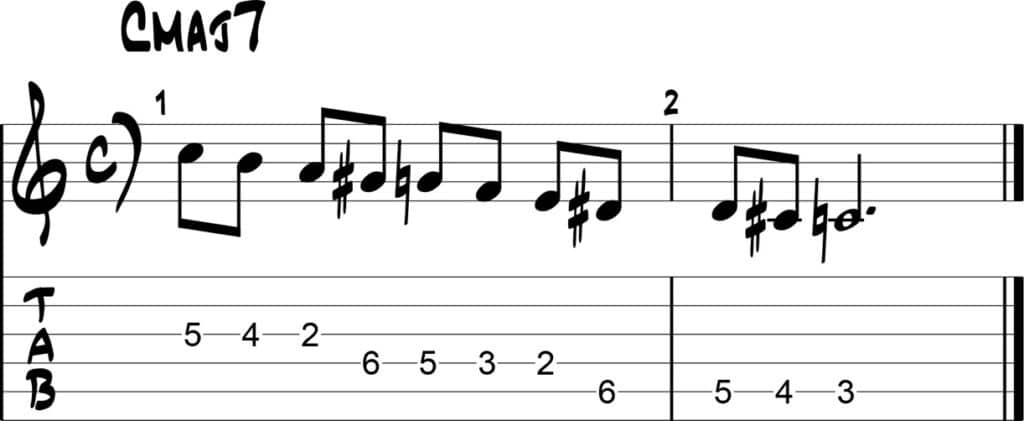
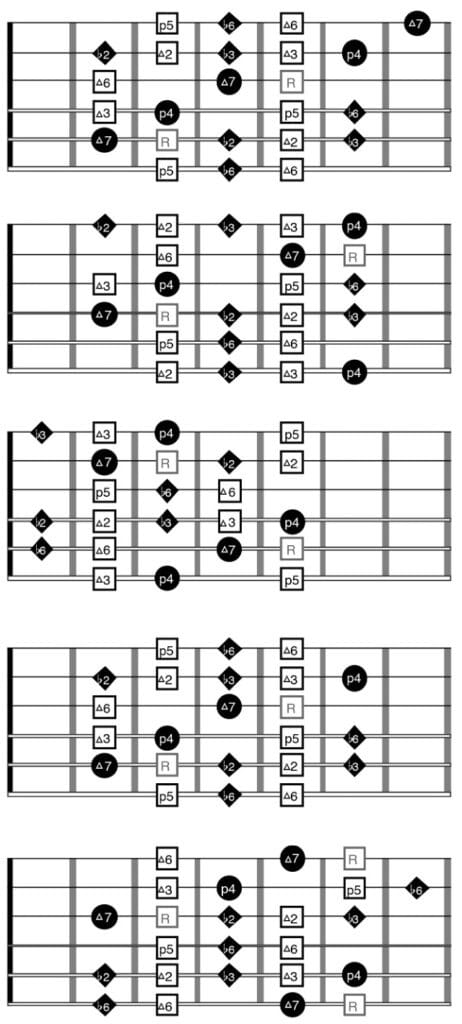
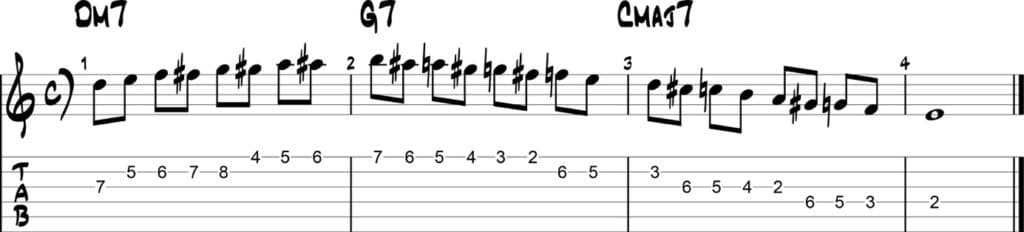
Example of all degrees using chromatic out of the bebop scales:
Leaving the Bebop scale system
How dare I to tell you to only put the chord notes on the downbeat and suddenly to make a chapter about putting scale notes on downbeats or leave the system behind you.
It’s right, there is no problem to put scale notes on downbeat if you use it as a flavor tone and resolve them back to the chord tones in the right way. Also there are possibility to use other chromatic approach notes to target scale or chord notes.
If you set a scale note on a downbeat, you should be able to bring them back to the chord notes and the bebop scale system.
Here are some ways how you can leave the system, then bring everything back to the system.
Usually the d# is not a note in the G- Dominant Bebop Scale. But if you use it as a chromatic approach note you can approach chord notes as well.
Put in chromatic approach notes above or below chord notes:
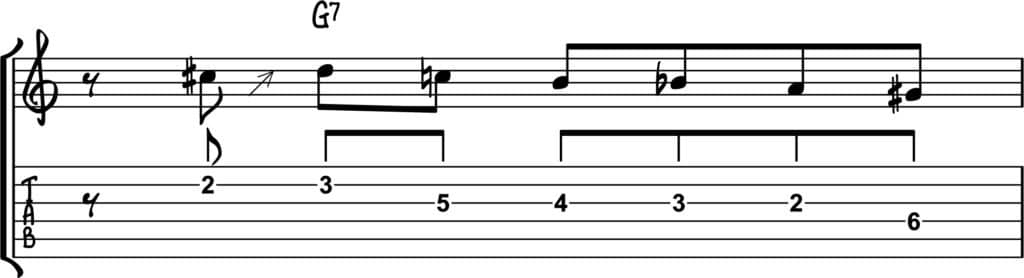
If you want to start phrases on a scale note – you can make a quarter note out of them – so the following line will fit in the system again.
Rhythmic variations to put scale notes on downbeats:
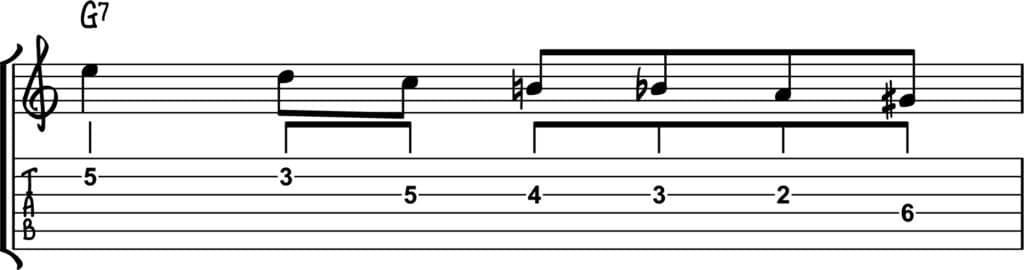
If you land on scale tone on a downbeat, a simple way to bring them back tot he system is to add a chromatic note to the next chord note.
Starting on scale note and adding a chromatic note to the chord notes:
Another method is to surround the note with other notes of the scale or with „chromatic enclosures“. In the next chapter we will talk more about these enclosures.
Go back the scale to land on a chord note again:
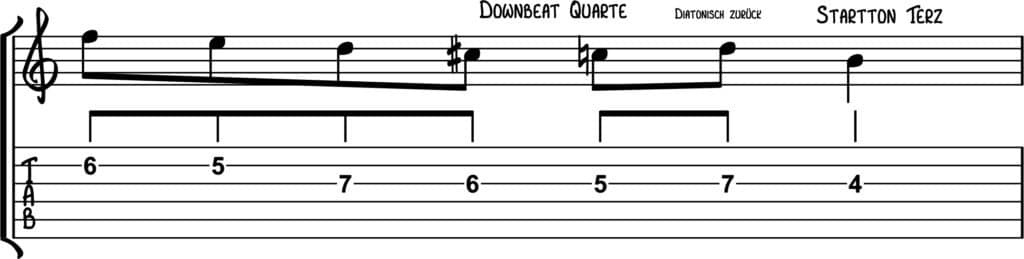
Chromatic Enclosures
I give a first look at chromatic enclosures in the last chapter. Chromatic Enclosures are one of the most important tools for creating bebop lines.
With this tool you can surround chord notes with other notes and give your lines more freedom but concept.
The idea behind chromatic enclosures is to enclose a note of the chord in many different ways with notes above and below which are a halfstep or a wholestep away from our target note.
If we take look tot he possibilities chromatic enclosures give us, we will find an uncountable amount of variations.
The following parameters can be included in an enclosure:
Halfstep below, Halfstep above, Scale note above, Scale note below, Wholestep above and Wholestep below.
After that we can choose how many notes we use for our enclosure.
Common are 2 note, 3 note and 4 note enclosure.
After this parameter, we can also make enclosures where a note appears 2 times etc.
The following pages are only examples of the big amount of possibilities (no need to practice).
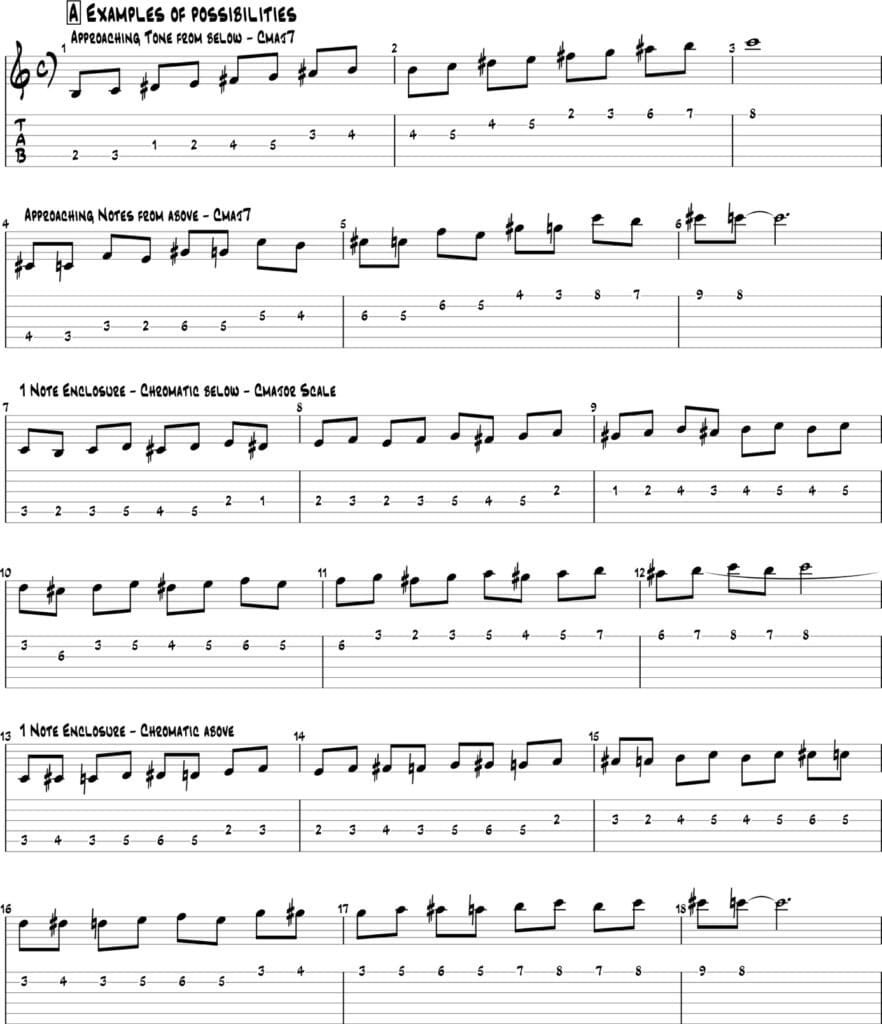
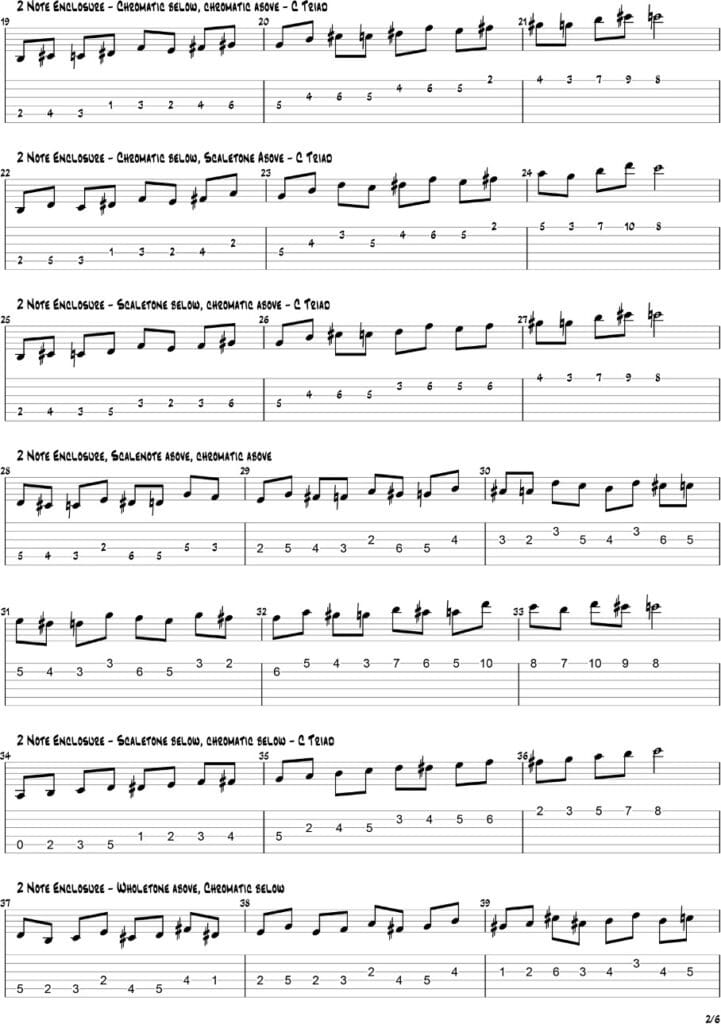
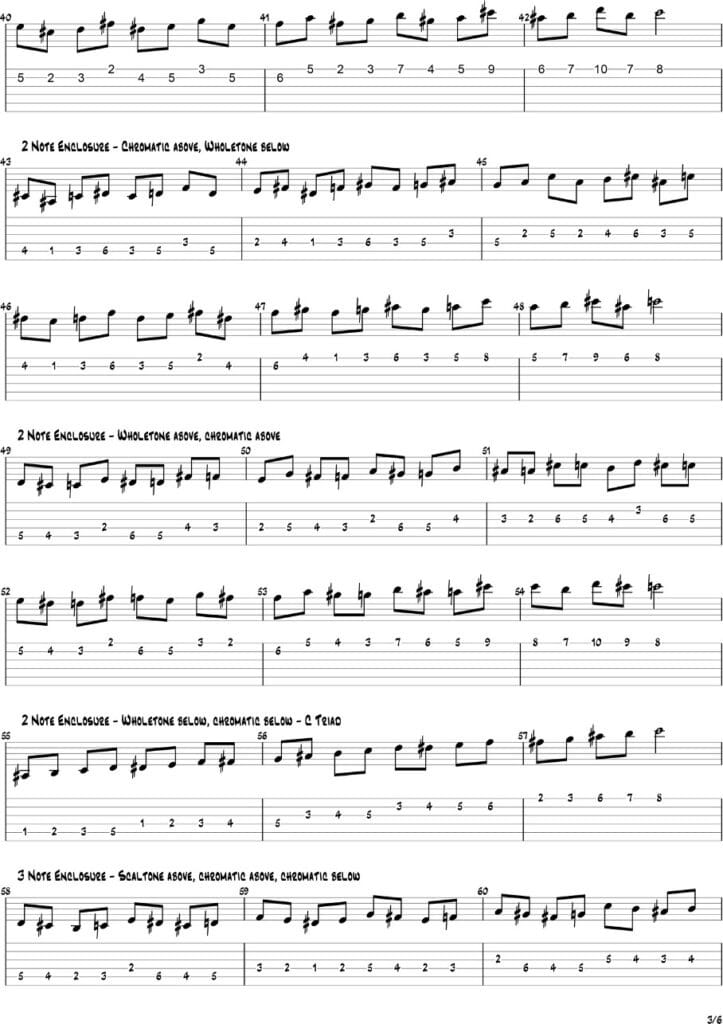
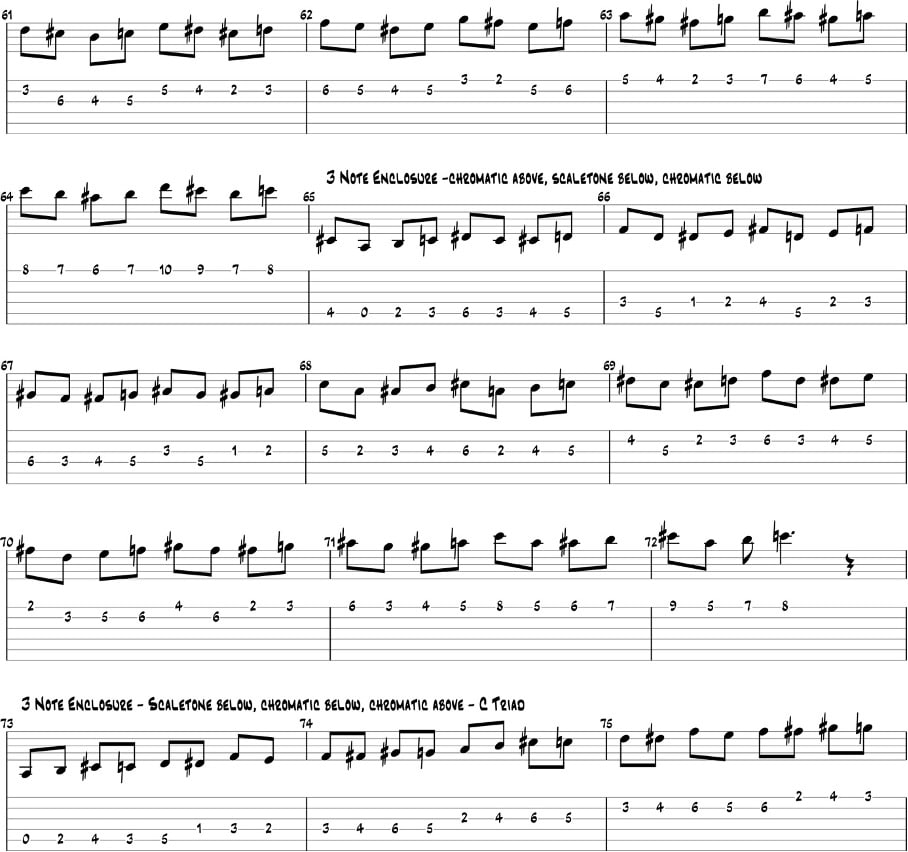
And so on and so on …
You see, there is an endless amount the more parameters we put in our filter.
What helps us is to look at the most common enclosures which come up in the bebop language.
Diatonic based Enclosures
The first thing I want to admit is the difference between diatonic based and constant structure-based enclosures. The more common enclosures in bebop are diatonic based enclosures.
What do I mean with that?
Diatonic based enclosures are enclosures with included the term of scale note above or below. So it oriented on the actual scale degree we want to enclose.
A constant structure enclosure only uses fixed intervals like Wholestep above, chromatic above, wholestep below, chromatic below, etc.
There are also constant structure enclosures in more modern jazz language. First we want to focus on the typical diatonic based enclosures which are common in bebop language.
Let’s take a look at the amount of possibilities fort he root of the dominant chord (in our case note G). (We put Scale tone above, scaletone below, chromatic above and chromatic below in our filter)
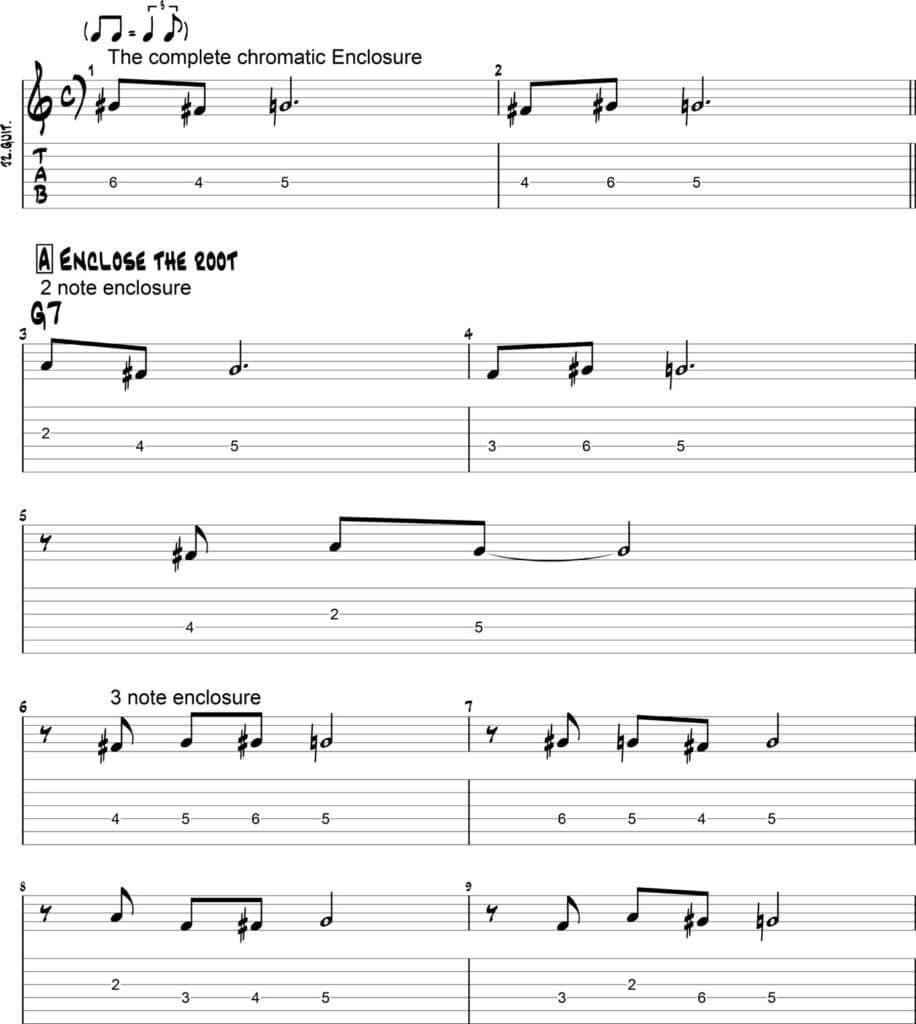
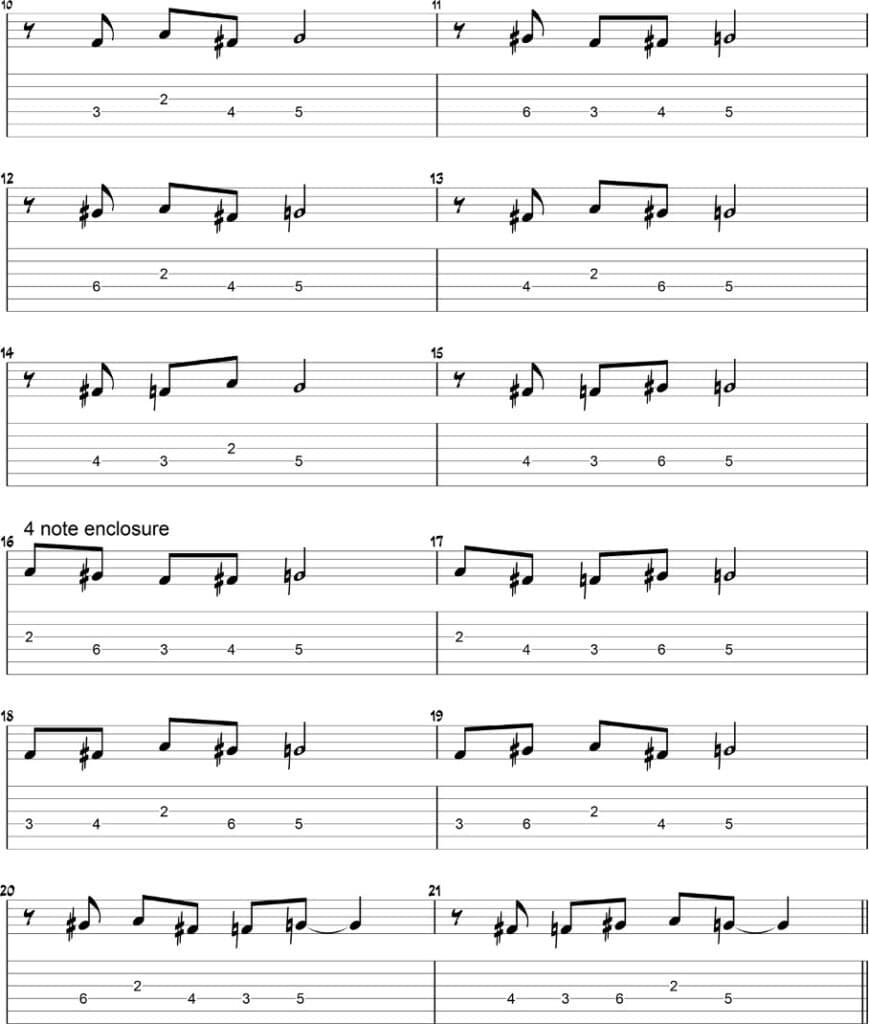
There are also some enclosures where you have no chance to avoid that the chromatic tone landing on a downbeat. But that is not a problem for enclosures. The strong concept to play out the target note keep the listener hearing the chord notes. If your targetnote isn‘t landing on a downbeat, you can use it as a anticipation of the next downbeat – For example (targetnote on 2+ or targetnote on 4+). If the idea is strong, you don’t have to worry too much to put all chord notes on the downbeats – the enclosure is a concept of itself.
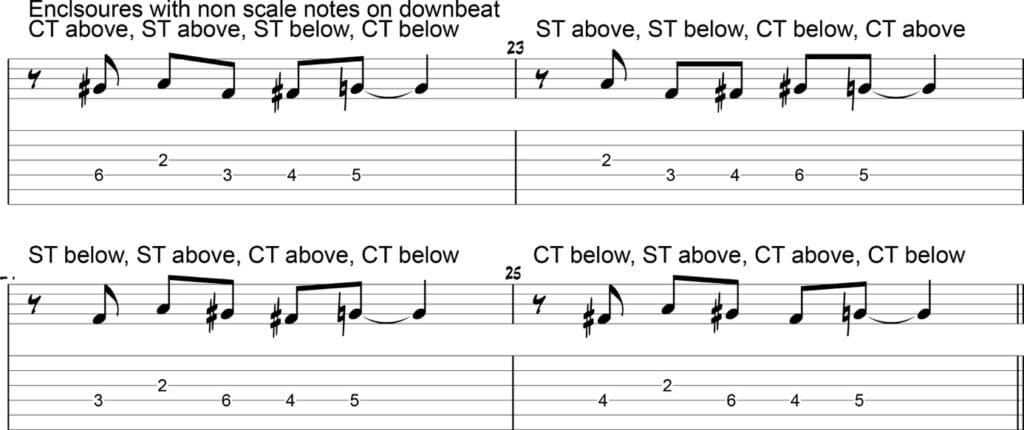
Our last enclosure is an enclosure with include two of the same note. This is very common in bebop language. With this kind of enclosures it’s often impossible to set every chord tone on a downbeat, but it’s a big part of the language. One of the most common enclosures is Scaletone below, chromatic above, scaletone below and chromatic below.

Here are some examples of enclosing the 3rd of the dominant chord. The last examples also include double noting enclosures.
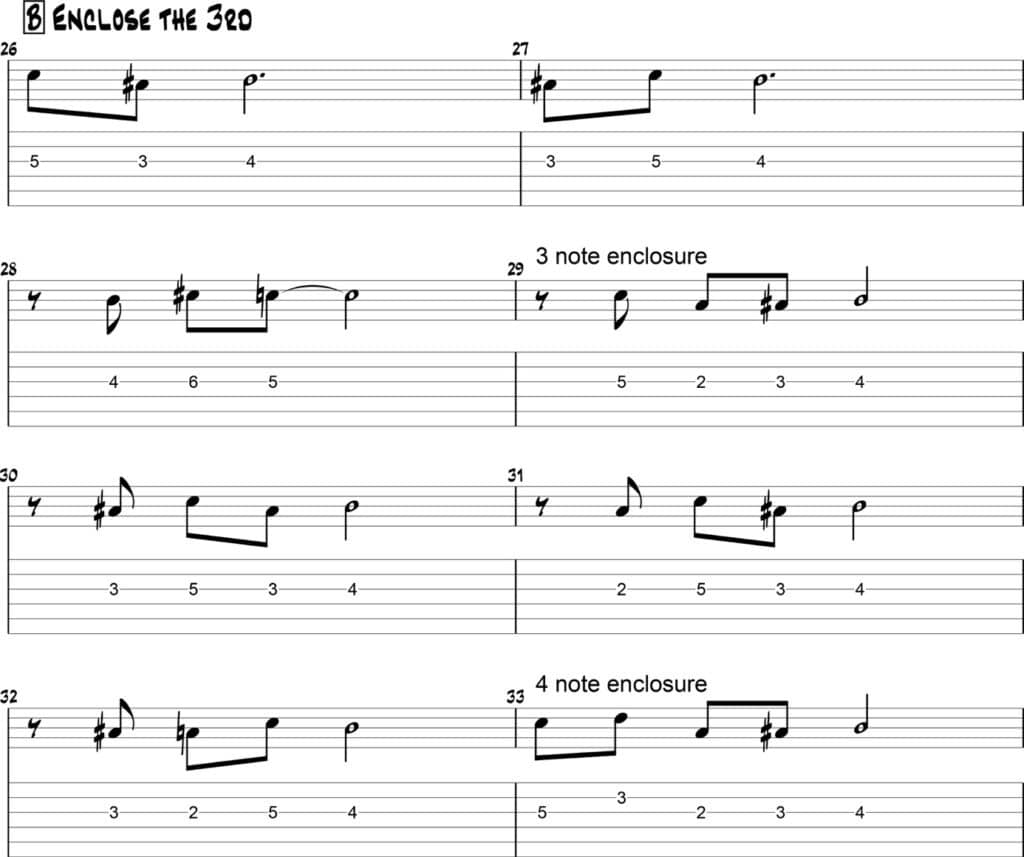
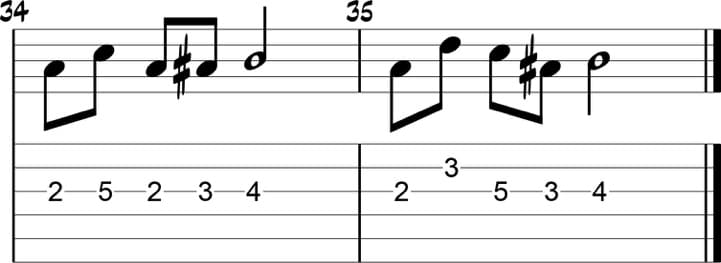
now you have an idea of the big amount of possibilities to enclose a chord note. The big question now is how you can practice it. The answer is to look at which enclosures were used by the great bebop musicians and which enclosures do you personally like. After that, write the enclosures down and use them whenever it’s possible in your lines. In the next chapter, I instroduce you to the most common Bebop enclosures to get a start into it.
Common Enclosures in Bebop
Ok, now we leave our dark scientistic laboratory and go to the real world. Which enclosures are often used by bebop muscians?
I will give you a shortcut oft he most common bebop enclosures. It can help to give fantasy names to your enclosure like a pet ;-). So it is easier to get it in your brain and use it whenever it is possible in a certain situation.
Let’s go to the most common enclosures
- The mother!
I call it the mother because it’s the most basic enclosure you can think of. Bebop musicans like it to use it on the fourth beat of a measure to resolve it to the next guidetone of the voice leading.
Halftone above, Halftone below and halftone below, halftone above à the mother
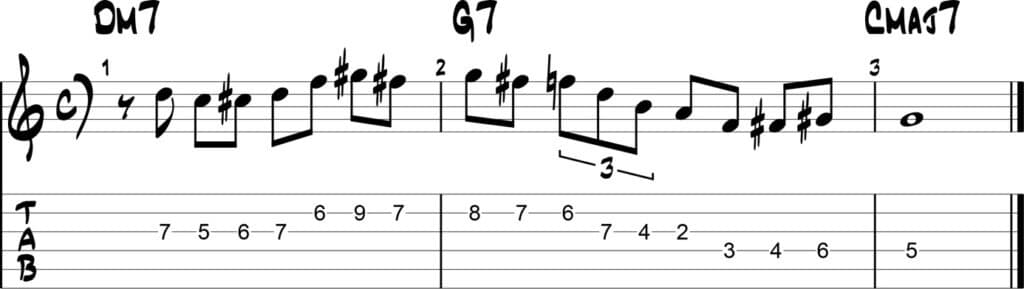
The mother is a constant structure enclosure – no scale note necessary.
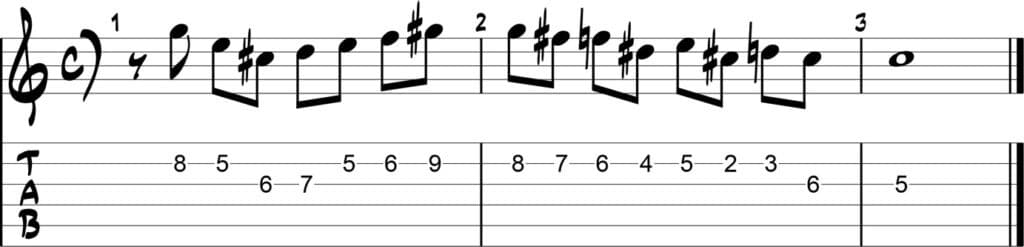
- The standard
I call it the standard because it happens all the time in my lines.
Scaletone above, Halftone below or Scaletone below, Halfstep above
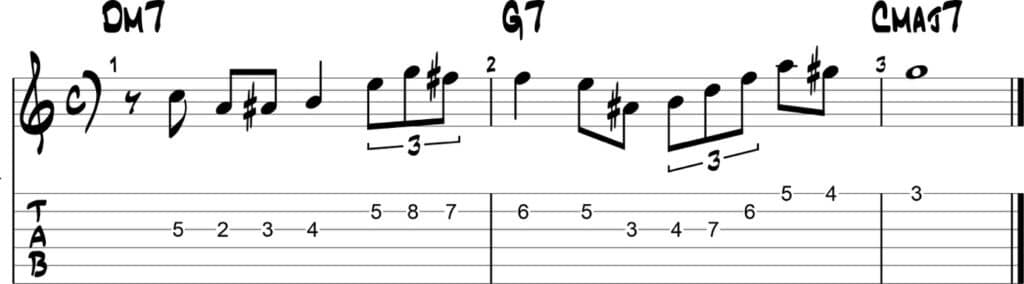
- The neighbor
I call it the neighbor. The reason is that this enclosure is perfect if there is a scale tone halfstep away from our targetnote.
Halfstep below, scaletone above, chromatic above or. Halfstep above, scaletone below, chromatic below
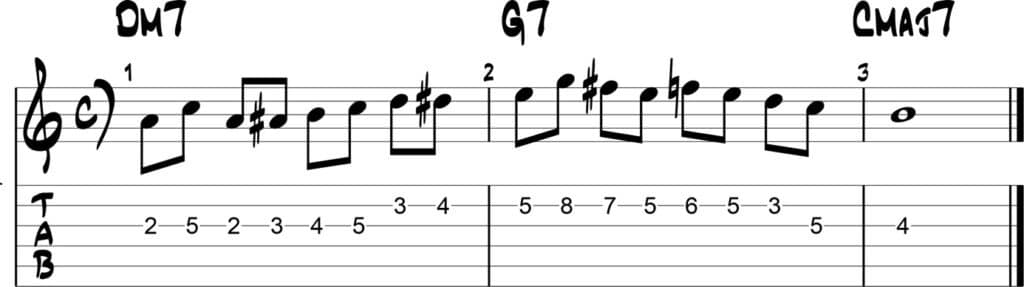
- The Backflip
Backflips have a double note in it where you can go back to make your lines longer. They can happen in a diatonic based way, but they are also common in a constant structure way.
Halfstep below, Wholestep above, halfstep above, halfstep below or Wholestep below, halfstep above, whole step below, halfstep below
- The big one
Big enclosures are enclosures with a big range of a wholestep below and a wholestep above the note. They are perfect for targetnotes which have two scale notes alow and above which is a wholestep away from each other. But they also happen as constant structure enclosures for other target note situations.
Wholestep below, chromatic below, wholestep above, chromatic above or
Wholestep above, chromatic above, wholestep below, chromatic below or
Wholestep above, wholestep below, chromatic below, chromatic above or
Wholestep below, wholestep above, chromatic above, chromatic below or
Wholestep above, wholestep below, chromatic below, chromatic above or
Wholestep below, wholestep above, chromatic below, chromatic above
- The Zick Zack
The „Zick Zack“ Enclosure goes a little bit more far away to the third of the targetnote. The Formel is:
Diatonic above, third above, chromatic below, diatonic above
Arpeggio Superimposition
Superimposition or also called upper structure chords are a technique to expand the quality of the given chord by doing another chord above.
Bebop musicians use this technique quite often to have a bigger repertoire of arpeggio possibilities.
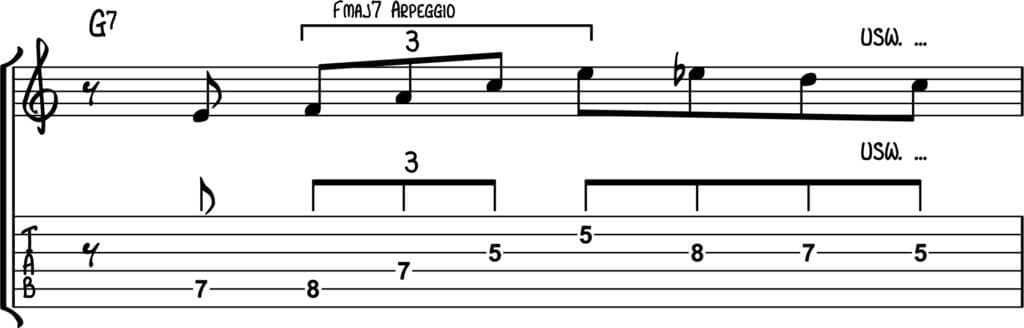
If we take a look at our G7 chord we can play a G7 Arpeggio over it. But it also possible to play a Fmaj7 over it. The Fmaj7 give the G7 more options (9, 13, 11). If we play an Em7 Arpeggio over the G7 we play out the option note of the sixth. It’s a free concept, you can play every thinkable chord arpeggio over a Dominant chord to expand them to some option notes or alterations (for example (Em7#5, Fmaj7#11, Am7, Bb, Db, etc.) but the most common arpeggio is a diminished arpeggio played on the b9, 3rd, 5th and b7 of the dominant chord. The system of the diminished arpeggio repeating every minor3rd. The reason is that the arpeggio only consists out of minor3rd intervals. So you can begin your diminished arpeggio on the listed degrees.
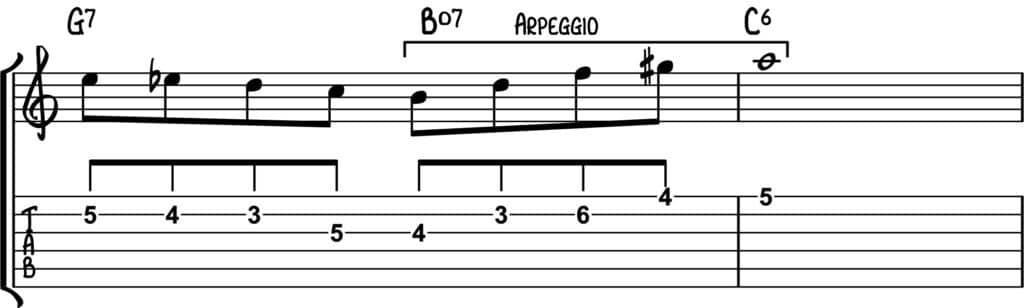
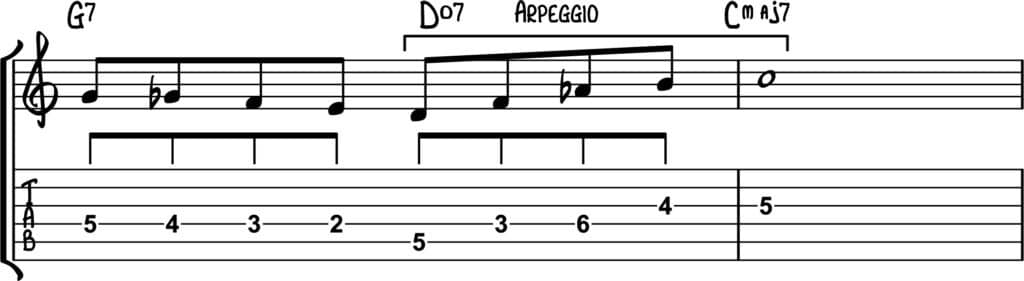
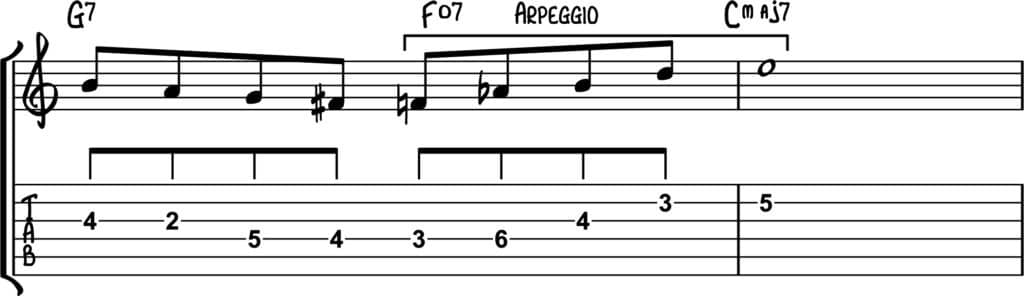
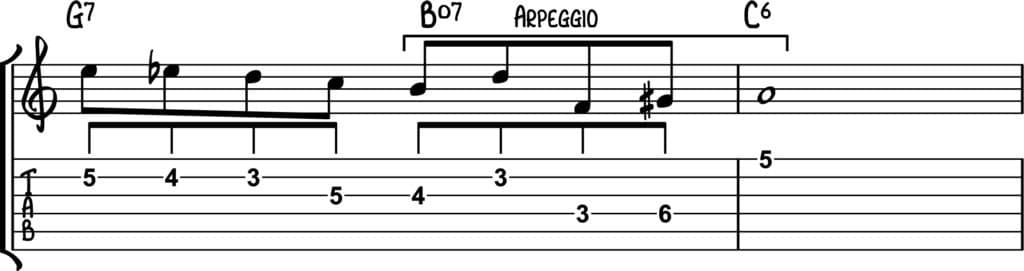
Here you see how the diminished arpeggio is related in a Dominant7 Arpeggio pattern
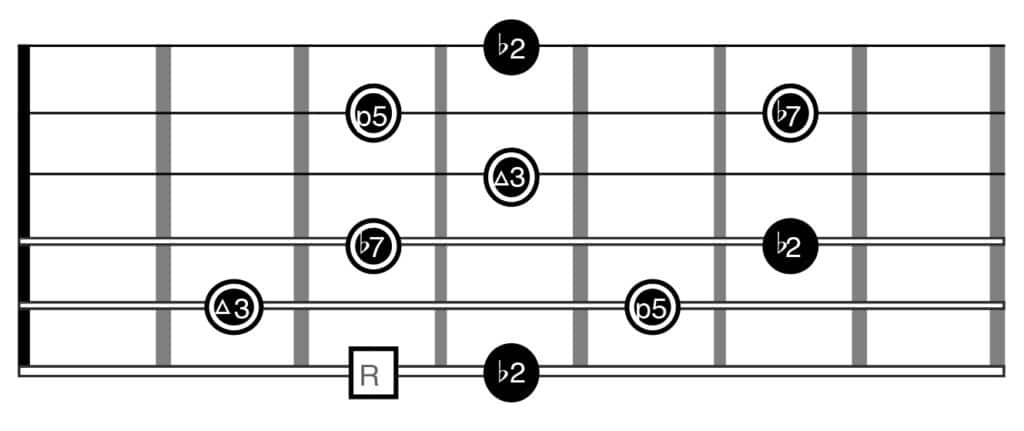
You see that the diminished arpeggio alteration our dominant to a Dominant7(b9) chord. This alteration is really common.
The following patterns show you the possibilities of playing the diminished arpeggio on the whole fretboard.
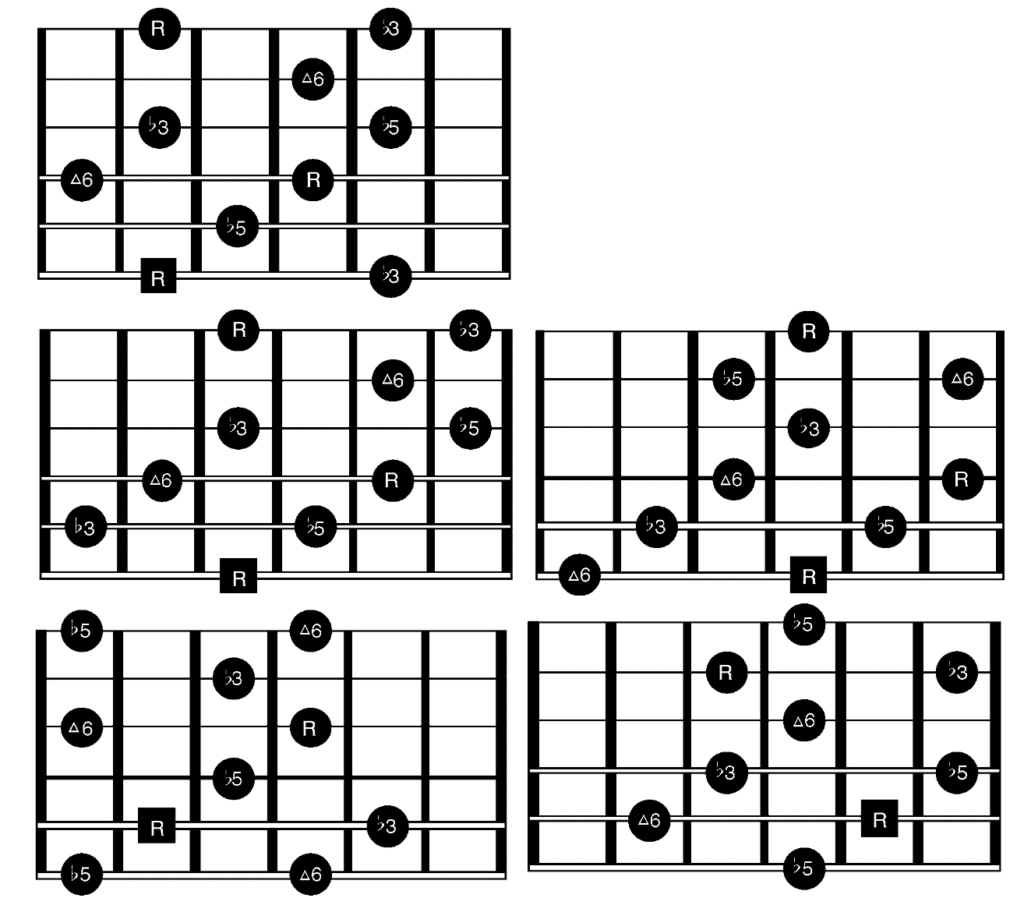
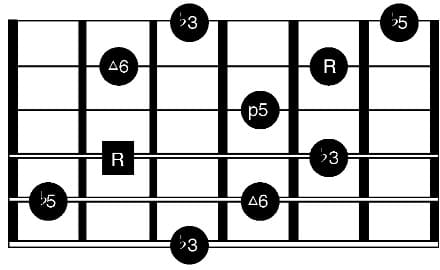
Keep in mind that you see the same pattern with changeable roots. You can choose every note as a root note of the patterns.
Typical rhythmical and melodic ornaments
In every musical language we can find typical things which happen all the time. The Bebop language has also some typical melodic and rhythmical things which come over.
Let’s talk about some rhythmical things you should keep in mind if you want that your lines sound more like bebop.
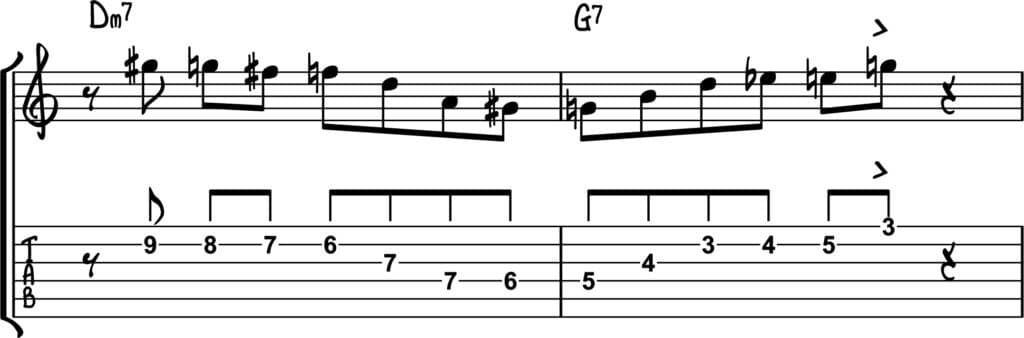
Bebop beginnings and endings
A good idea to come more into the bebop sound is to start your phrases on upbeats and end your phrases on upbeats. This gives your lines more the feeling of the „Beeee-Bop“ .
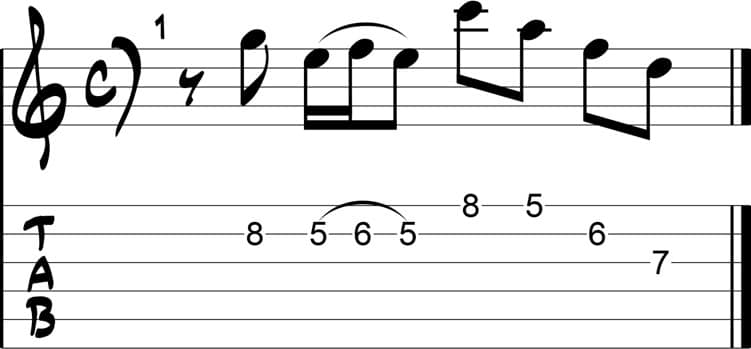
Using trillers
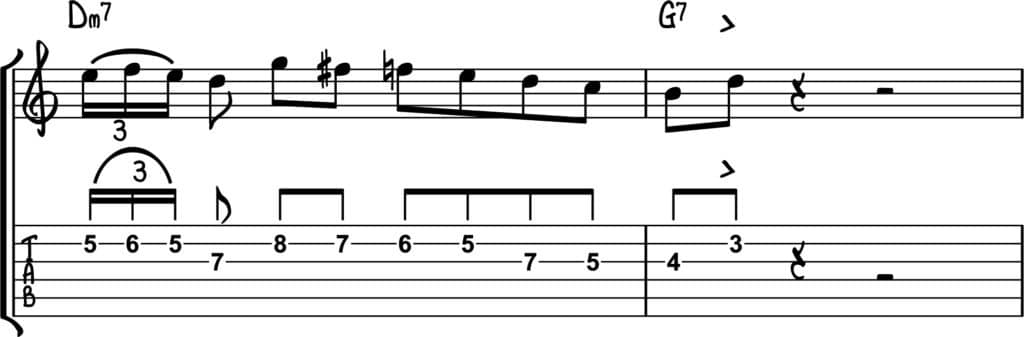
A very common rhythmical idea is to use a triller of 16th notes and an eightnote in combination. Also a 16th note triplet and eightnote combination are very common.
Arpeggio triplets
The arpeggios and the already taken through arpeggio superimpositions are often played in triplets with a chromatic approach note.
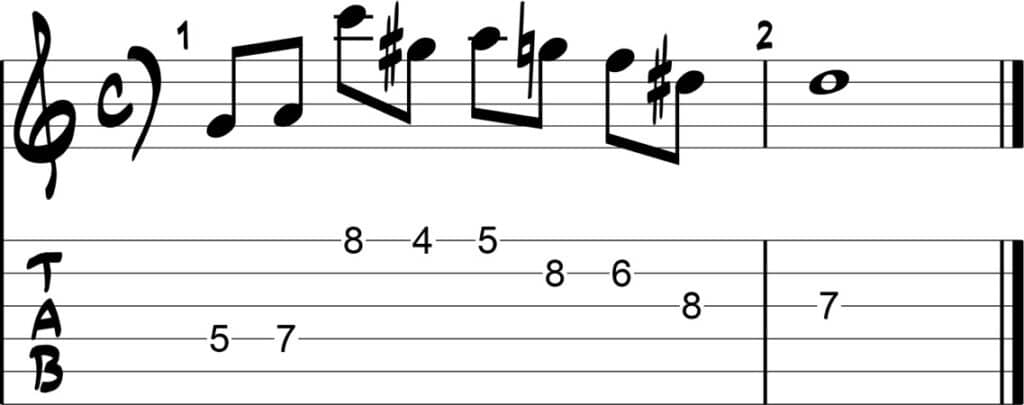
Octave displacement
Maybe you know that a saxophone has an octave key. So it’s pretty easy and common to change the octave of a line on the fly. To imitate this on the guitar you can practice to play your line further an octave above.
Superimposed chord changes
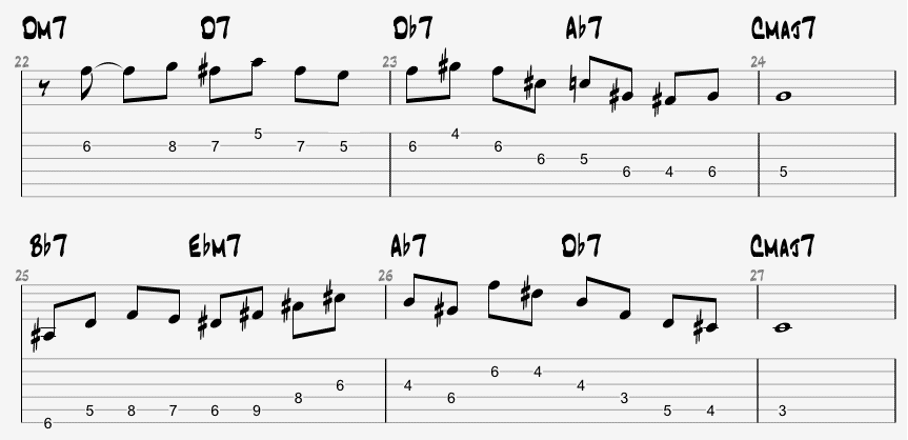
In this last chapter, I will give a first quick view in the world of superimposed chord changes or simply reharmonization ideas. Bebop players like to extend the given chord changes in certain ways. Also in modern jazz it’s a common tool to make your lines more interesting or give them an „outside sound“. The most bebop compositions are older tunes which got more chord changes by new reharmonizations. So it’s also common to play out this reharmonization or superimposed chord changes on fly even if the whole band don’t know which kind of new chord changes you add to the tune ;-).
It’s an endless topic but here are some of the most typical bebop reharmonization.
Adding chains of Dominants
You can at some dominant or chains of dominants to the given chords. (the band play simply Dm7 – G7 – Cmaj7)
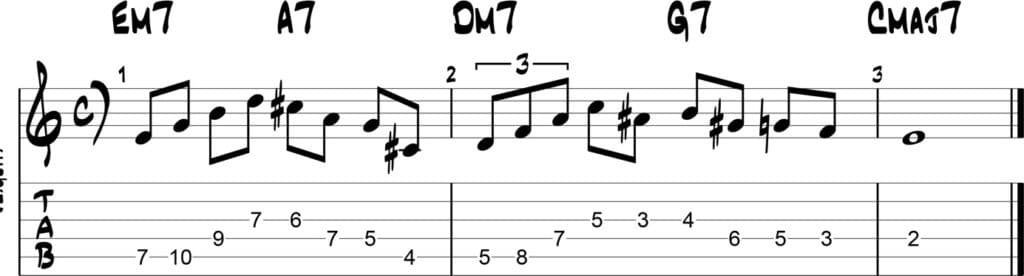
Adding tritone substitutions
If a tritone substitutions is a new word for you, you should check out some music theorie books. The scope of this quide is to small to give to much insight of this terms.
But in simple words: A tritone substitutions is a Dominant chord which is a tritone away from the given chord.
So with this technique you can add this kind of chords and use them for new reharmonizations with other dominant chains.
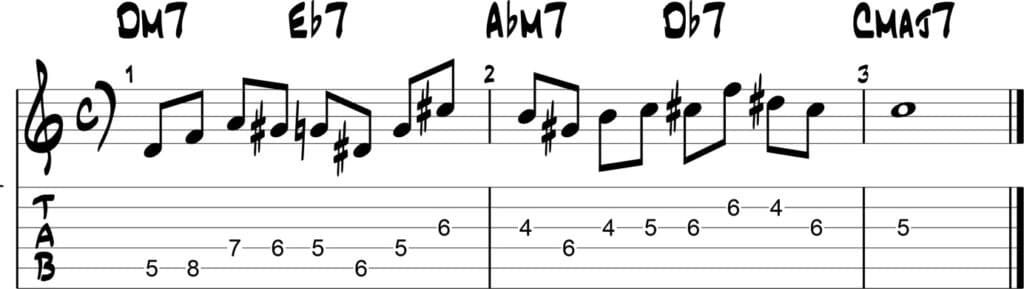
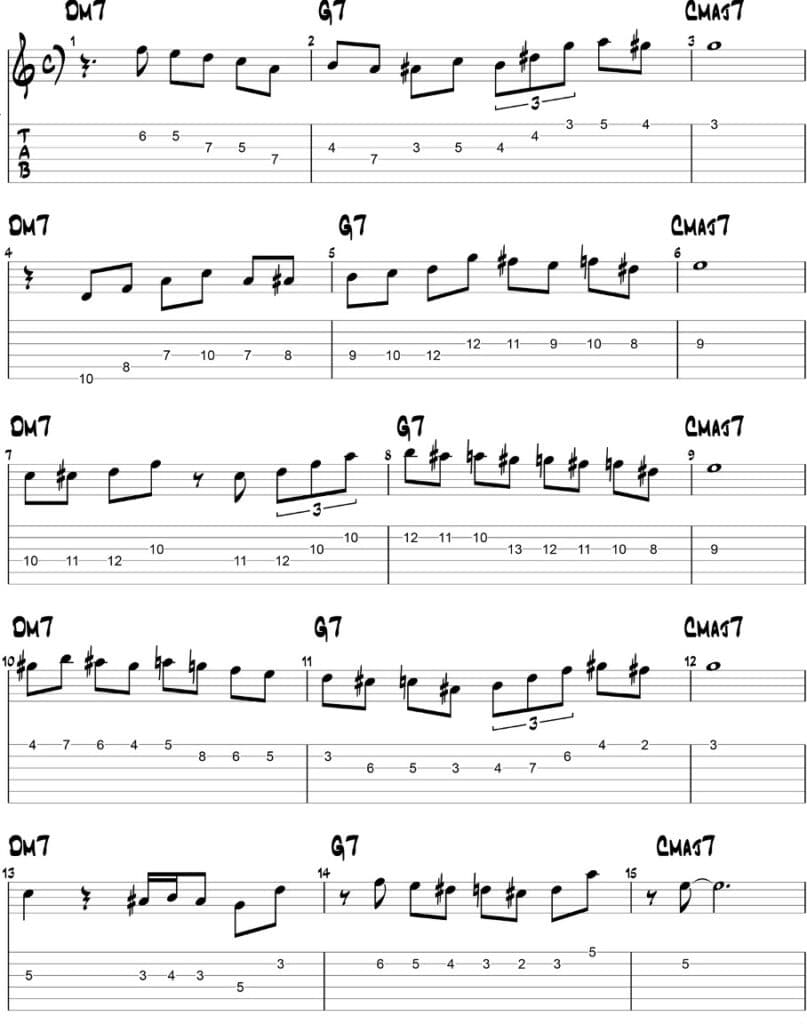
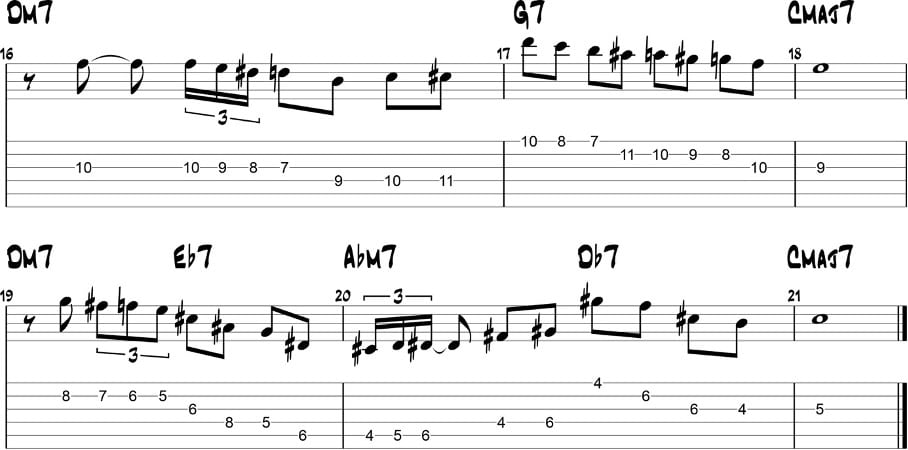
Bebop Lick examples
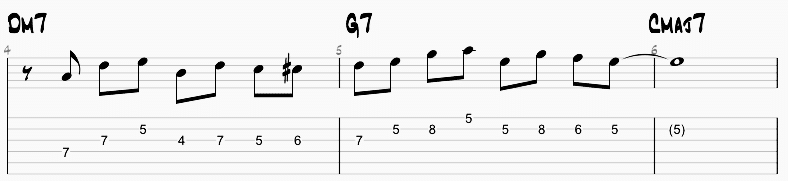
Now you have a big amount of tools to create your own bebop lines. Here are some examples I made out of our tools: