oldtime-swing

A journey to the past
Surprisingly, most guitar player who wants to discover the world of jazz starting in the era of the 50s, 60s, or much later. Players like Wes Montgomery, Joe Pass, George Benson, Pat Metheny, and many more are more well known as players like Carl Kress, Freddie Green, Dick McDonough, Eddie Lang, Charlie Christian or Nick Lucas. But apart from that, the music of these jazz roots players is just as beautiful as later players and is a great source for inspiration. This music helps you to understand everything which comes after in the world of jazz. In this book, I would like to take you on a quick journey through the styles of roots jazz and swing music of the 20s and 30s.
Big Band Shell Voicings
Besides the solo performance, the guitar was an instrument for Big Bands. Freddie Green was one of the famous Big Band Guitarplayer. He played in the Count Basie Big Band and created Chord Voicings for Jazz guitar we still use today in modern jazz – called „Freddie Green“ or „Shell Voicings“.
To learn these Voicings is a fundamental basement for everything which came up after. Learning these voicings will help you to accompany every jazz tune you will encounter.
Maj7 – E Typ
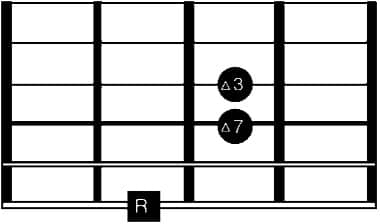
Maj7 – A Typ
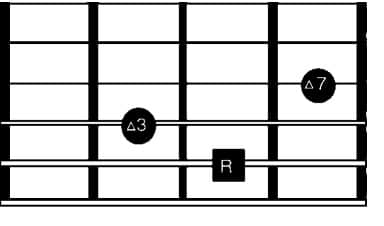
Dominant7 – E Typ
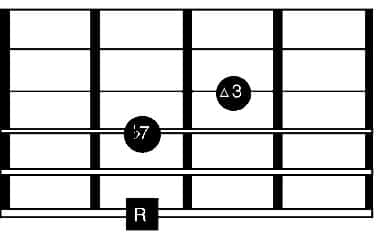
Dominant7 – A Typ
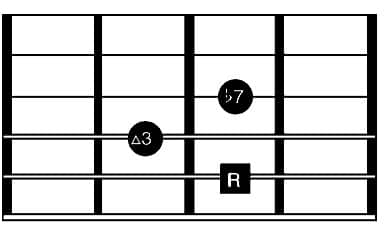
m7 – E Typ
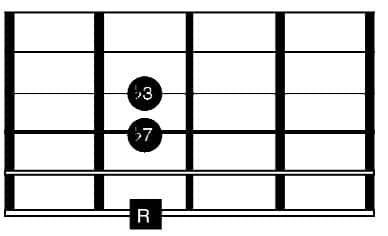
m7 – A Typ
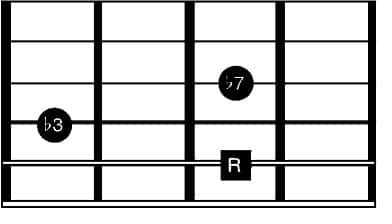
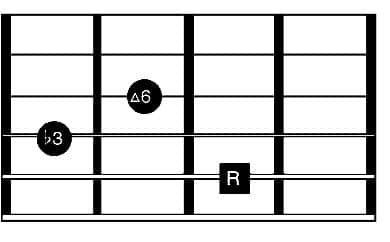
m6 o. vermindert – E Typ
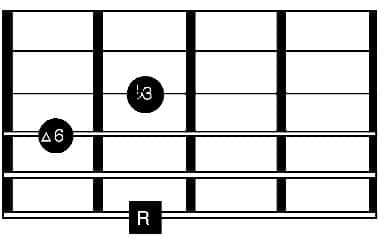
m6 o. vermindert – A Typ
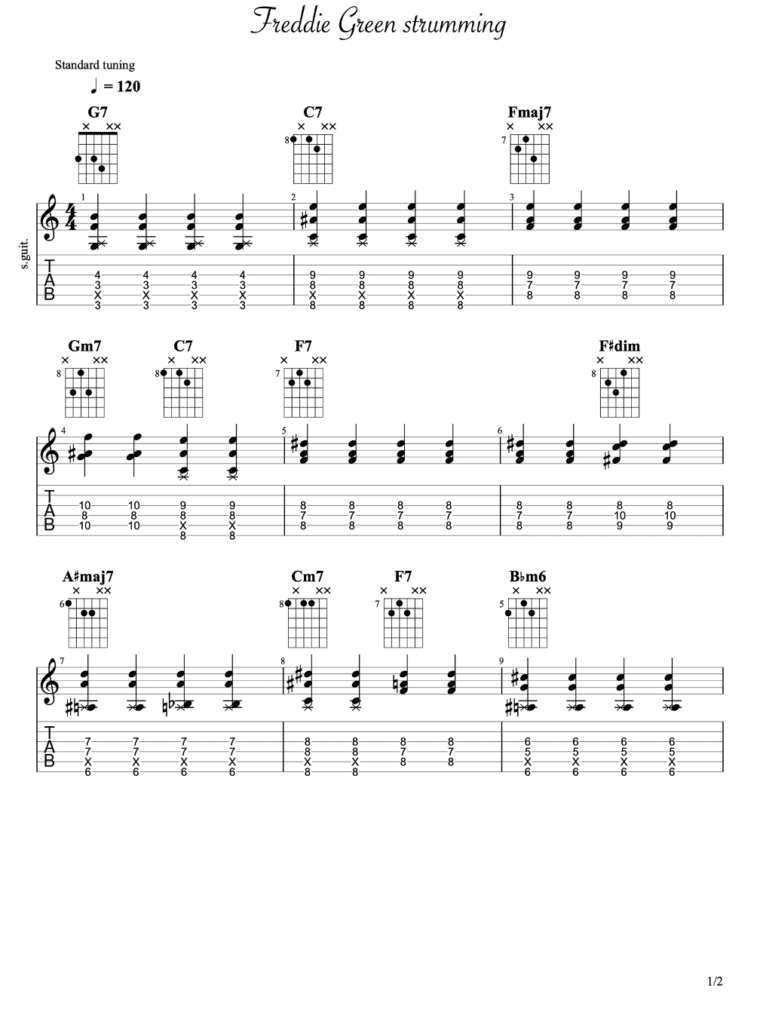
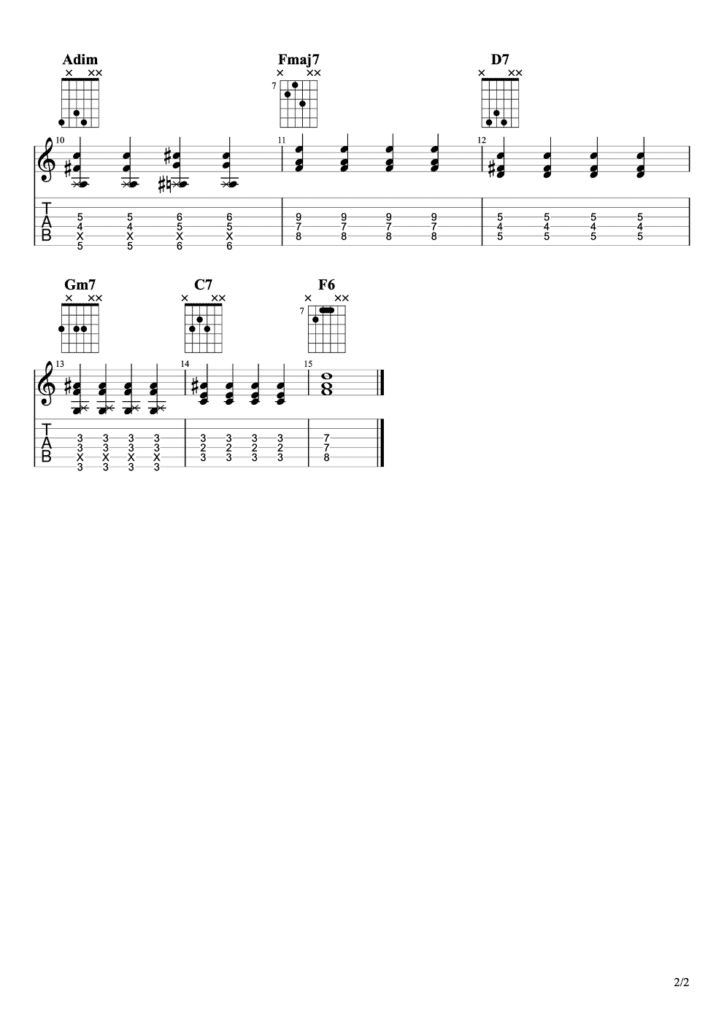
Try to use the „Freddie Green“ Voicings with simple tunes. Try to play the following chord changes. Focus on an even quarter note strumming but not legato. The strumming of Freddie Green was more even than the style of the Gypsy players. Every Quarternote had the same length. Also very common is the Style „La Pompe“ of the Gypsy Jazz guitar. In „La Pompe“ Style you play the Quarternote on 1 and 3 long. The Quarternote on beat 2 and 4 get a short staccato sound. You can control the length of the notes with your left hand.
Playing melodies with chordshapes
Guitar players like Eddie Lang, Dick Mc Donough, and Carl Kress used simple inversions of chord shapes to extend the melody notes.
To get a foot in this style, it’s important to learn all inversions of triads, minor7, dim7, minor7b5 and dominant7 chords all over the fretboard on the higher string set. I collect some of the most common shapes for you. After that you can see other shapes which can cross your way in the world of jazz.
Most common swing chords
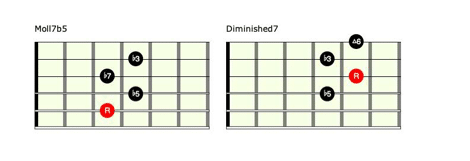
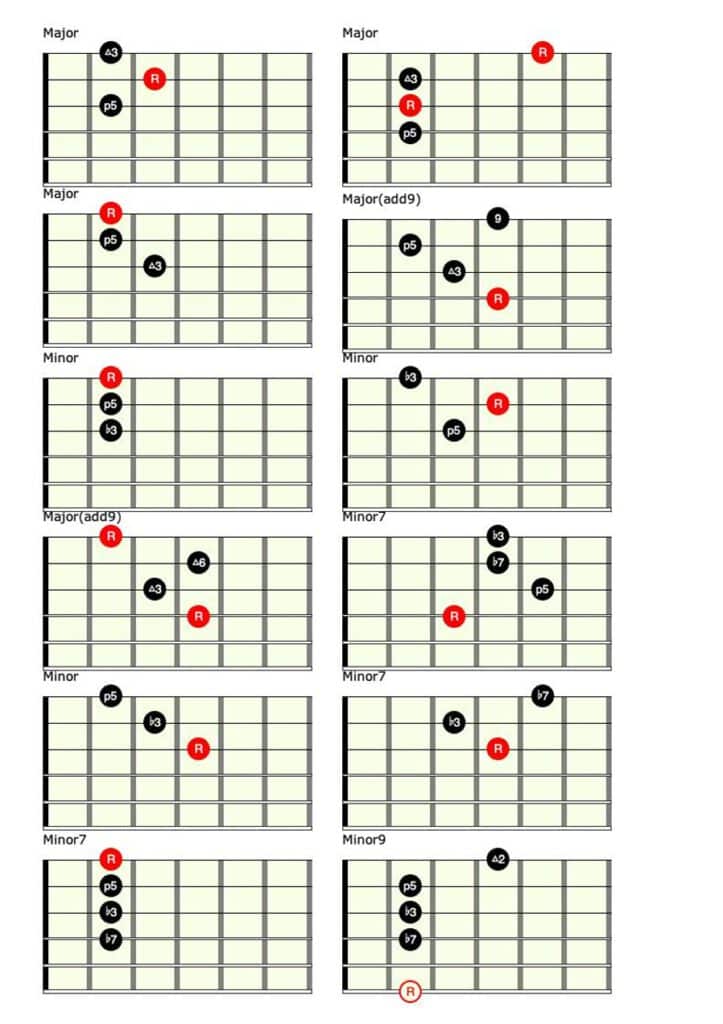
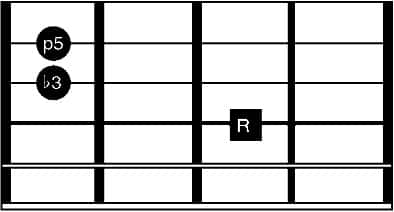
Other chords to learn
Minor
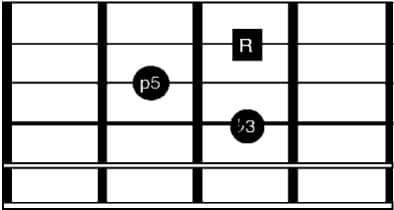
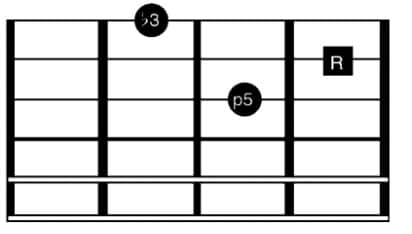
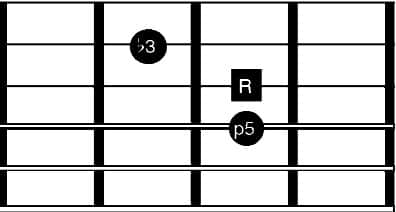
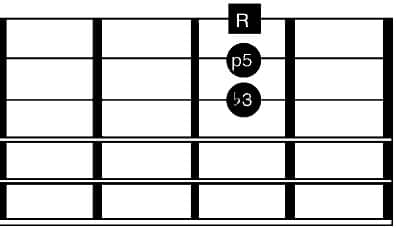
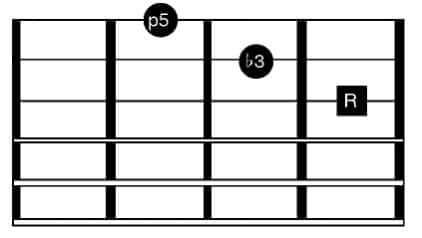
Major
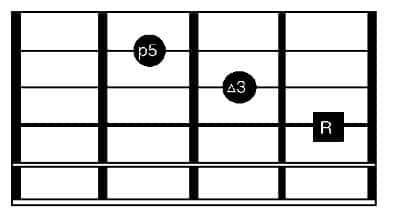
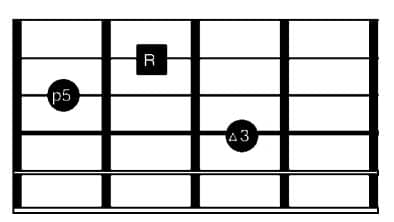
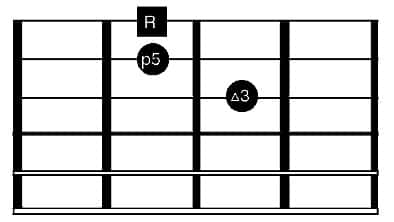
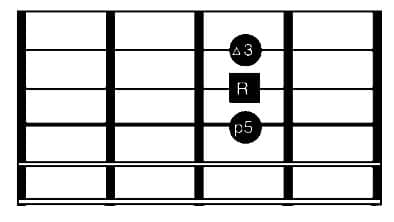
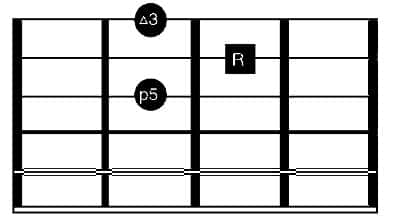
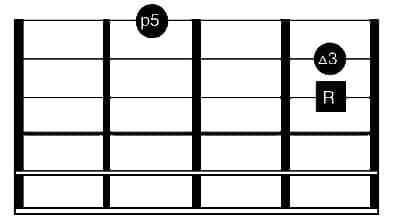
Minor7 Drop2 Voicings
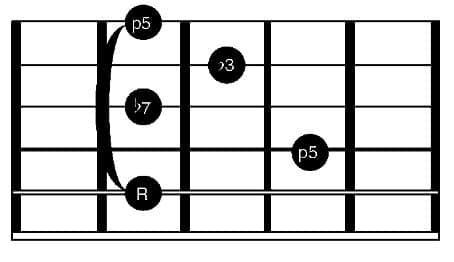
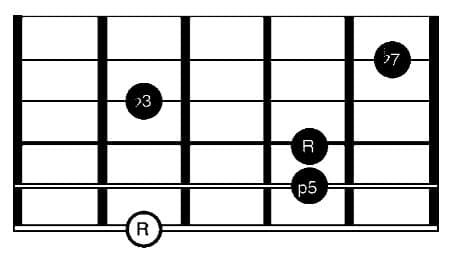
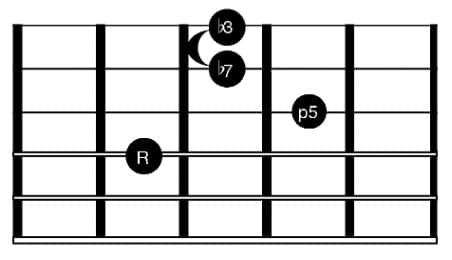
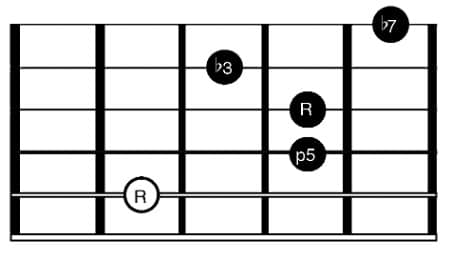
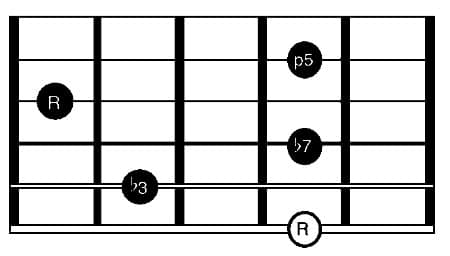
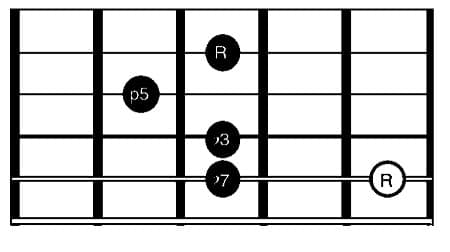
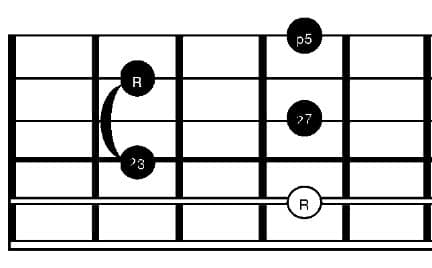
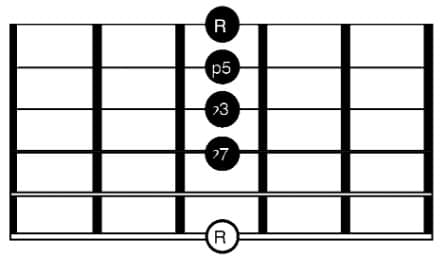
Dominant7 Drop2 Voicings
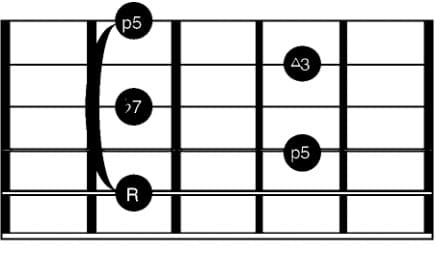
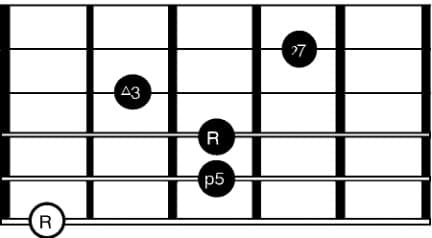
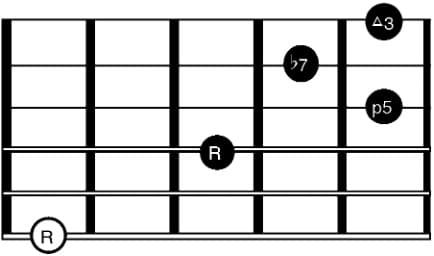
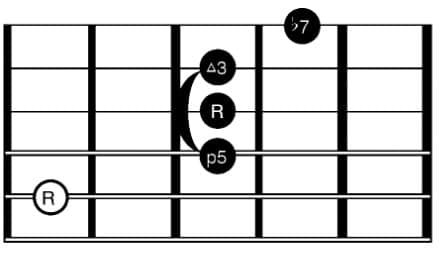
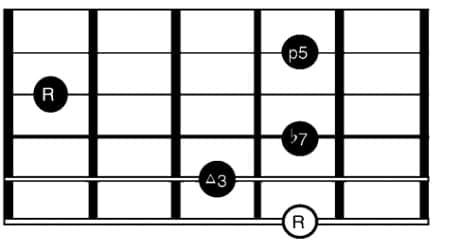
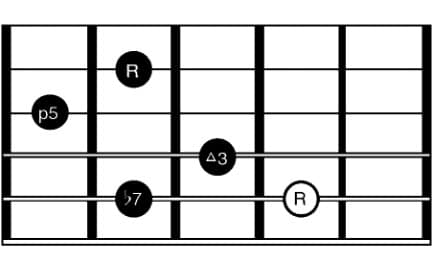
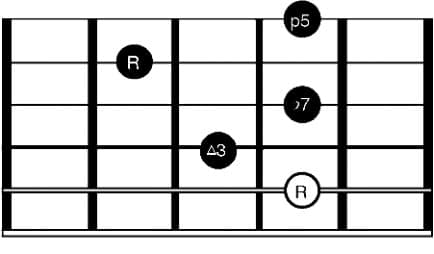
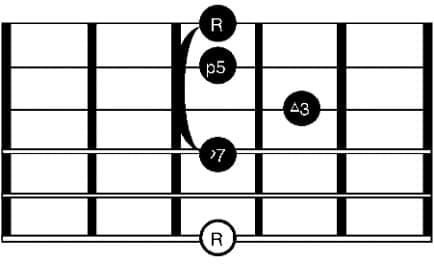
Minor7b5 Drop2 Voicings
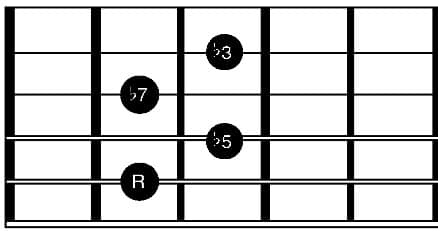
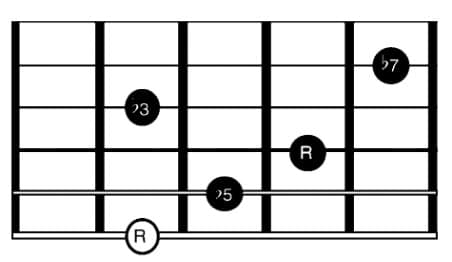
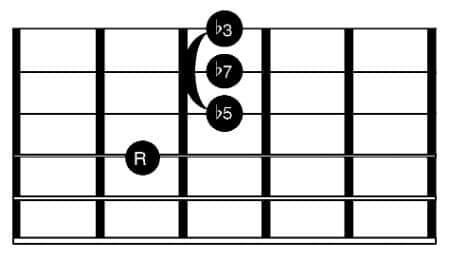
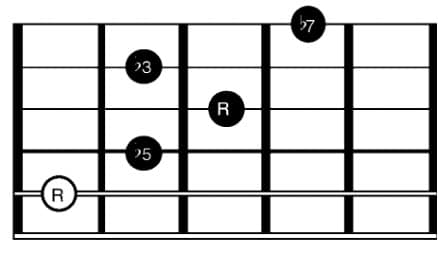
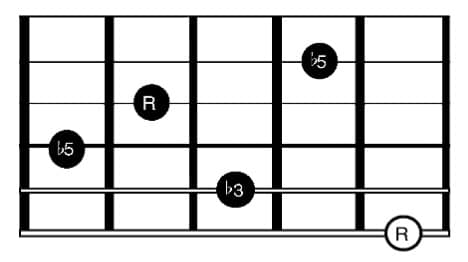
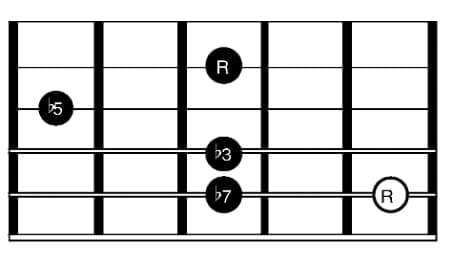
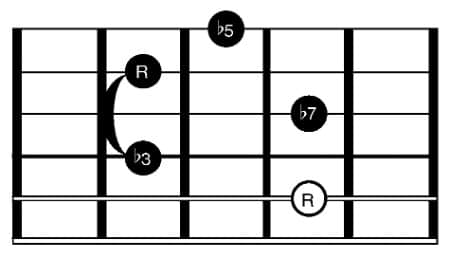
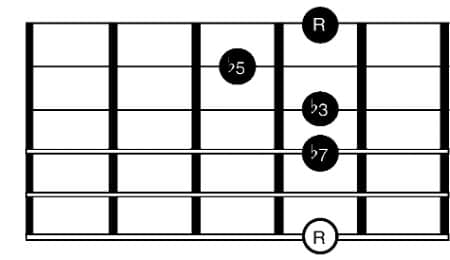
Diminished Voicings
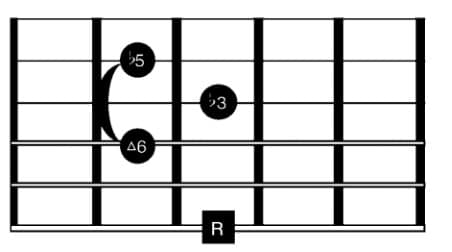
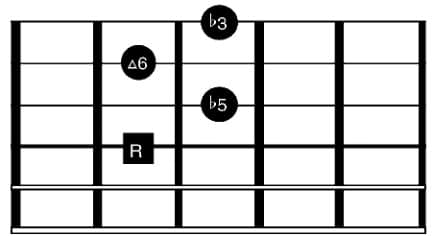
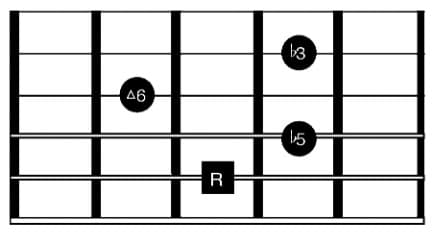
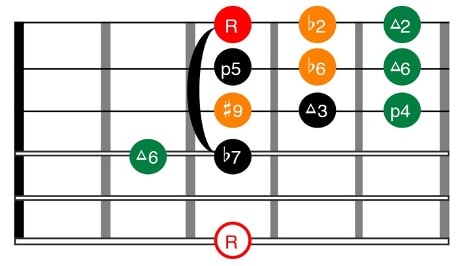
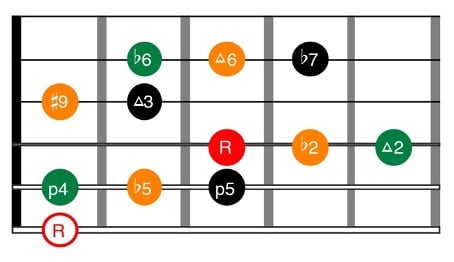
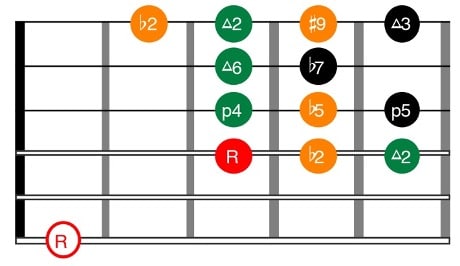
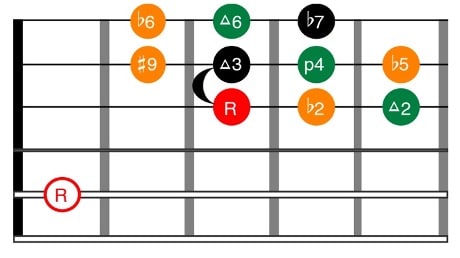
Dominant Alteration
Exercise! Play a dominant Voicing and try to change a note to create an alteration.
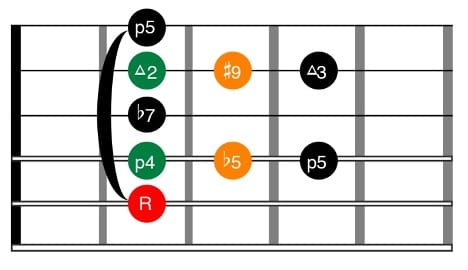
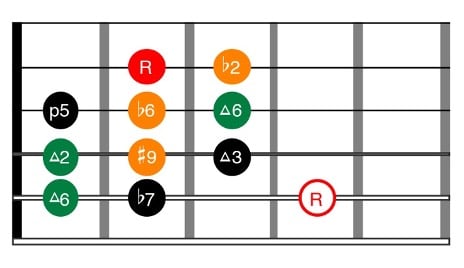
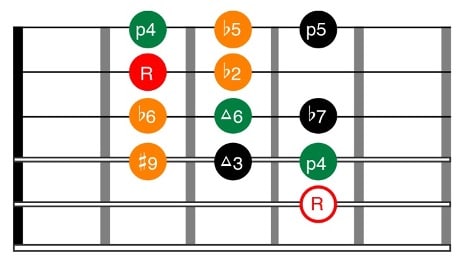
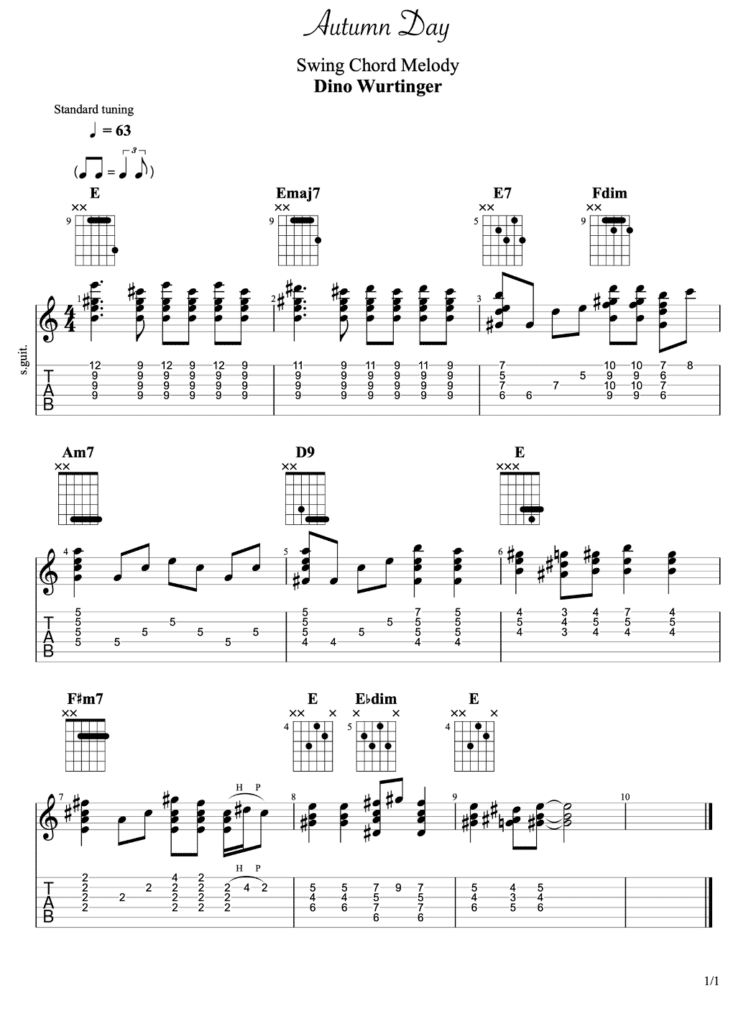
In the following example, you will see an original composition of mine in the style of Eddie Lang. I use the inversions on the high string set to accompany my melody line. You can adjust your chord shapes with the melody note or extend the shape with it. A very common technique in swing music is to head of a note or a chord by a half step below. Furthermore especially Eddie Lang was famous for adding fast scale runs in his Solo Performances.
Autumn Day
Improvisation
I think Django Reinhardt was one of the first great guitar soloing improvisers. But in this book, I would like to point out the style of the great Charlie Christian. He was the first electric guitar hero and an excellent swing improviser who really imidate the sound of the brass instruments.
Charlie Christians playing has a big foundation in the pentatonic scale.
It seems, that he played around a certain chord shape with the major or minor pentatonic and added passing notes to it.
If you take a look at his playing, you will discover some typical things Charlie Christian did.
- He played Major Pentatonic Scale with added b3 and b7 as passing note – even on first degree chords, the b7 can happen
- He also played the fourth of a chord shape, but mostly in combination for enclosing the major third in combination with the minor third of the chord.
- He played the same note on different strings alternately
- He played minor third and major6 of the shape as a double stop to create a screaming sound. A little bit like a rockplayer.
Keep these things in mind, but first learn his typical Major Pentatonic scale often called „Swing Scale or Country Scale“. It’s the major pentatonic with added b3 and b7. The only difference to the country scale is the use of the 4 to enclose the 3.
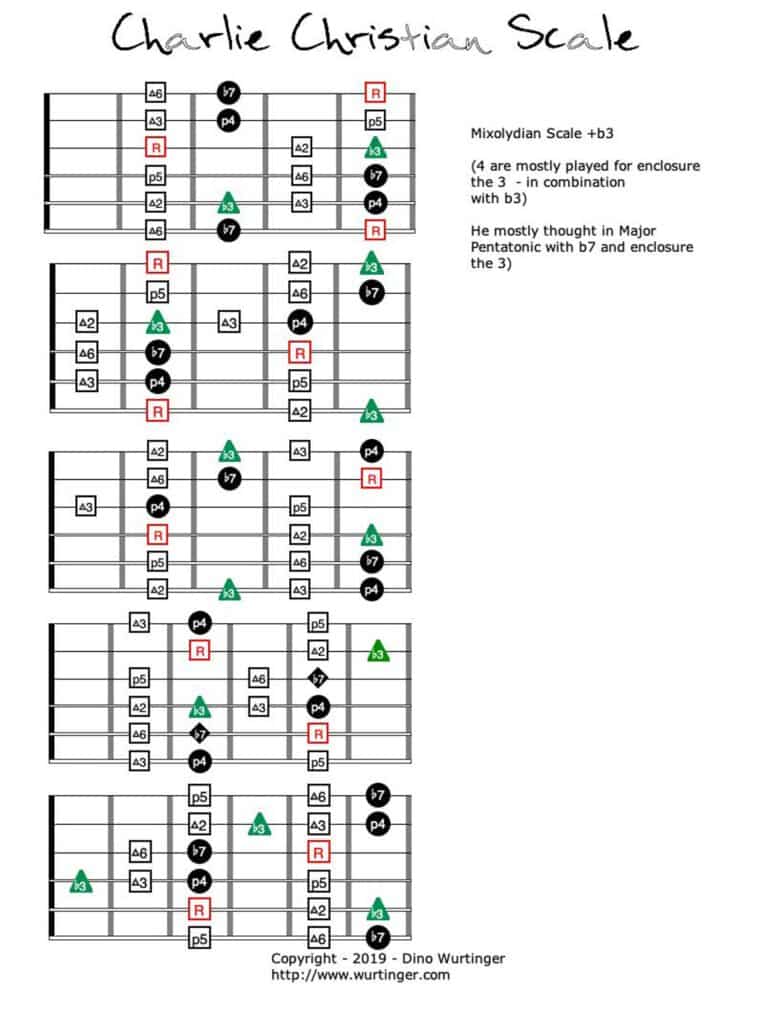
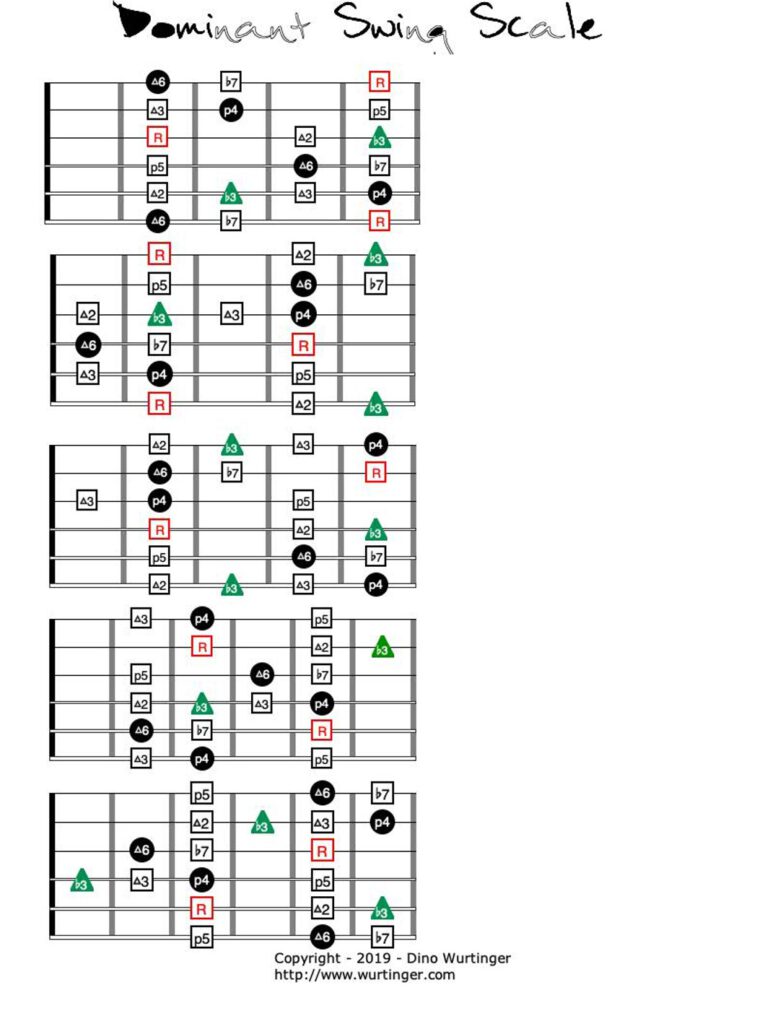
You can use the scale over each chord degree. Minor chords which happens in a 2-5-1 chord progression are often threaded as the dominant7 chord (the 5th degree chord) of the progression. So the player is not forced to change the scale too often. He only takes care of the dominant7 and the chord on the root. Keep in mind, that the b7 in the swing scale gets much more importance over the dominant7 chord. It is very typical to outline the b7 over the dominant7 chord. So it’s a good idea to change the hierarchies of the safe notes. You can think more in a „Dominant Pentatonic“ when you play over the 5th degree. The mind setting behind this idea can you see in the following pattern. I only change the Major Pentatonic notes (black boxes) to a dominant Pentatonic by set the b7 in the black boxes and the major6 as passing note.
Use chord shapes for your solo
Charlie often used common Chord Fingerings. He also used it for single note ideas. For example, he liked to use a Minor7b5 Voicings over Dominant7 Chords. – Dm7b5 over Bb7. This idea makes the Bb7 to a Bb9 Chord voicing.
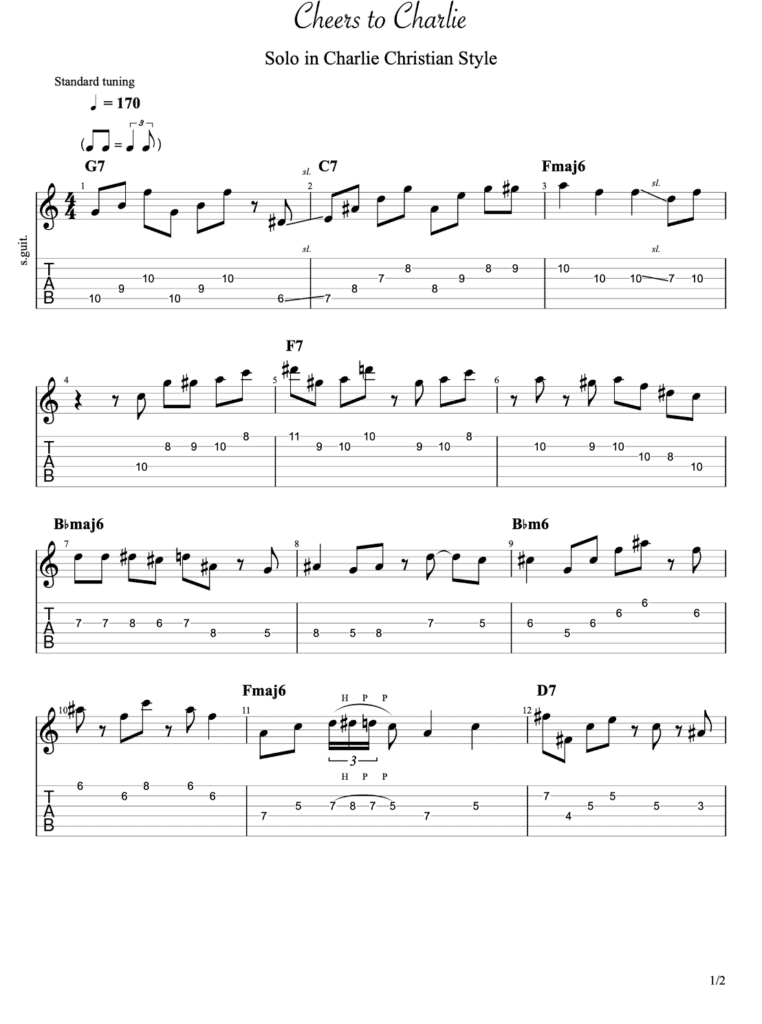
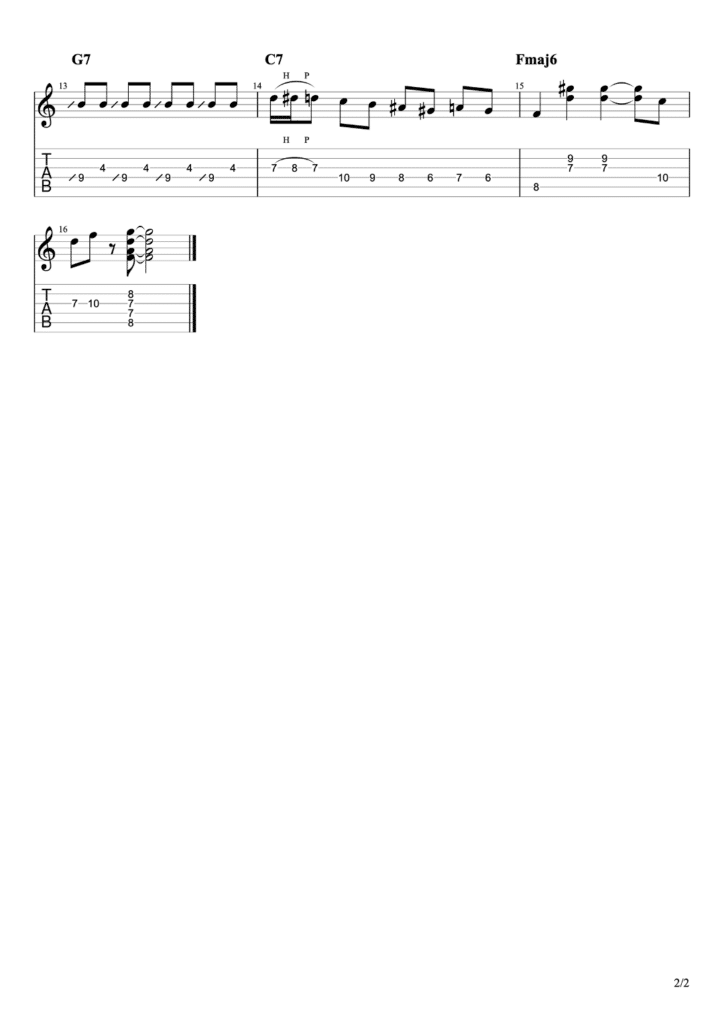
I played a little solo over the chord changes you already know. I try to imitate the style of Charlie Christian and played around with the Swing Scale Chord Shapes. I also add the b5 of the pentatonic scale as a passing note. In later Bebop style a big amount of chromatic passing notes can appear, the b5 is also a very common passing note in swing music. The combination of Major and Minor Blues Pentatonic Scale is a common tool for Swing and also Country Players. So don’t avoid things which sound good only because it isn’t in the swing scale ;-). The scale is only a basement to hold you on safe ice.
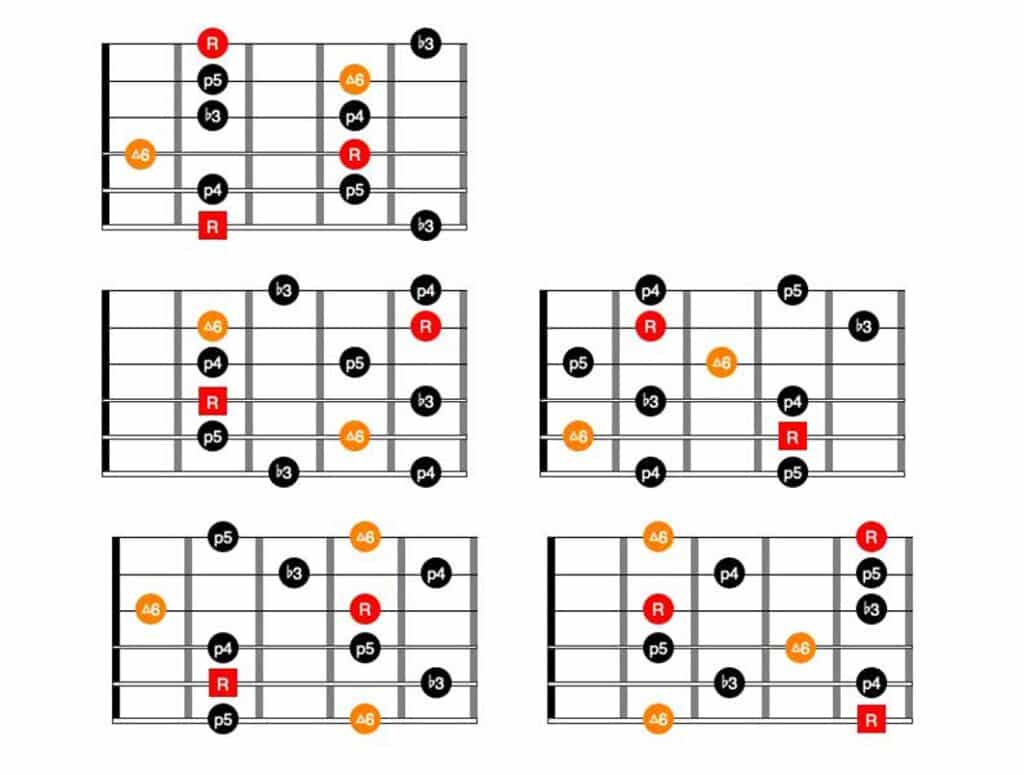
In measure 9 appears a minor6 chord. Minor chords which are built on the fourth scale degree usually played with the melodic minor scale. In early swing styles, the players tried to outline the chord with the minor6 pentatonic – you can also experiment with adding the bluenote(b5) or chromatic passing notes. Minor6 was the common chord type for minor-root chods.
Cheers to Charlie
Doublestops
I think this idea comes more from Western Swing music. Swing music played by Cowboys and Cowgirls with typical country instruments. One of these instruments is the pedal steel. Guitar players tried to imitate this instrument by using double-stops and moving it a half step down and up.
I use this technique quite often. It gives your lines a fuller intervallic sound. Here are some advises to get the sound:
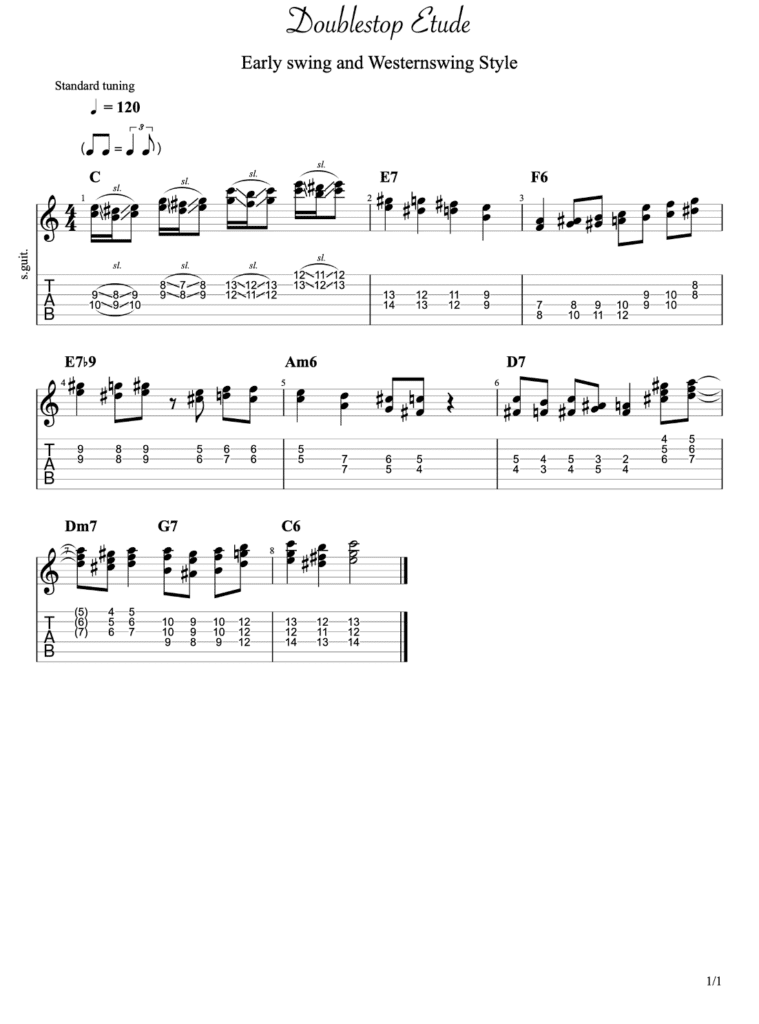
- Use 3rds and 4th intervals
- Try to set chord tone double-stops on the strong beats 1 and 3
- Chromatic approach notes or passing double-stops are set on the upbeat or 2 and 4 – except anticipations
- Focus on the current chord to get a strong double stop idea
I wrote a little etude for you to get the sound under your fingers.
Double Stop Etude
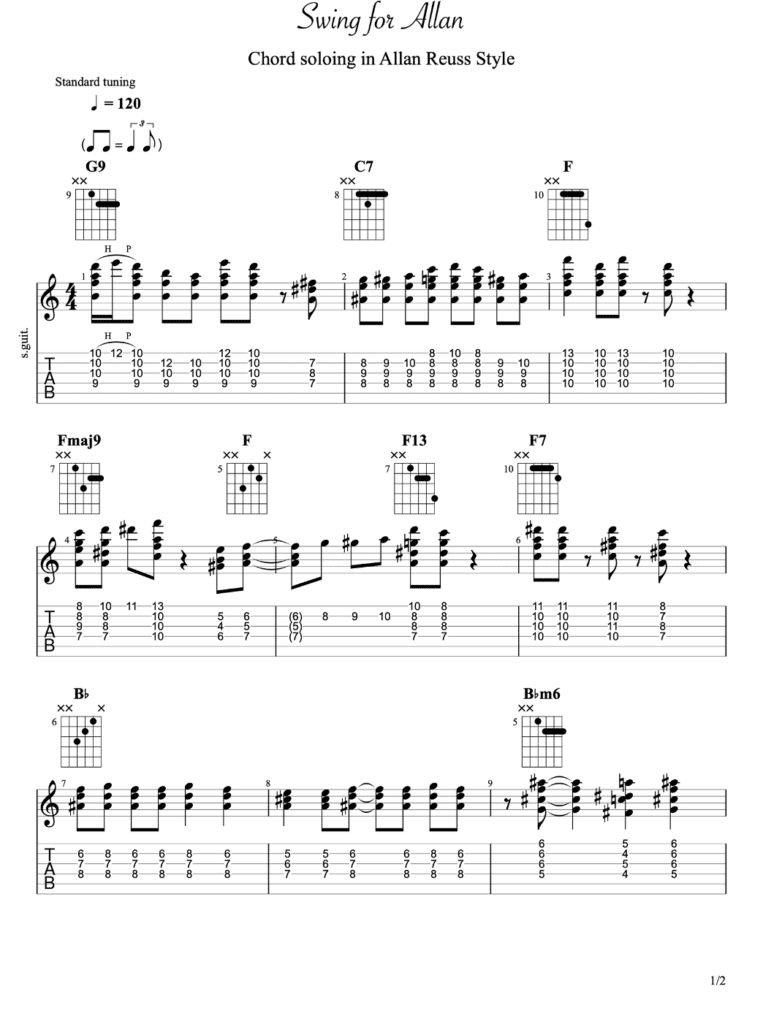
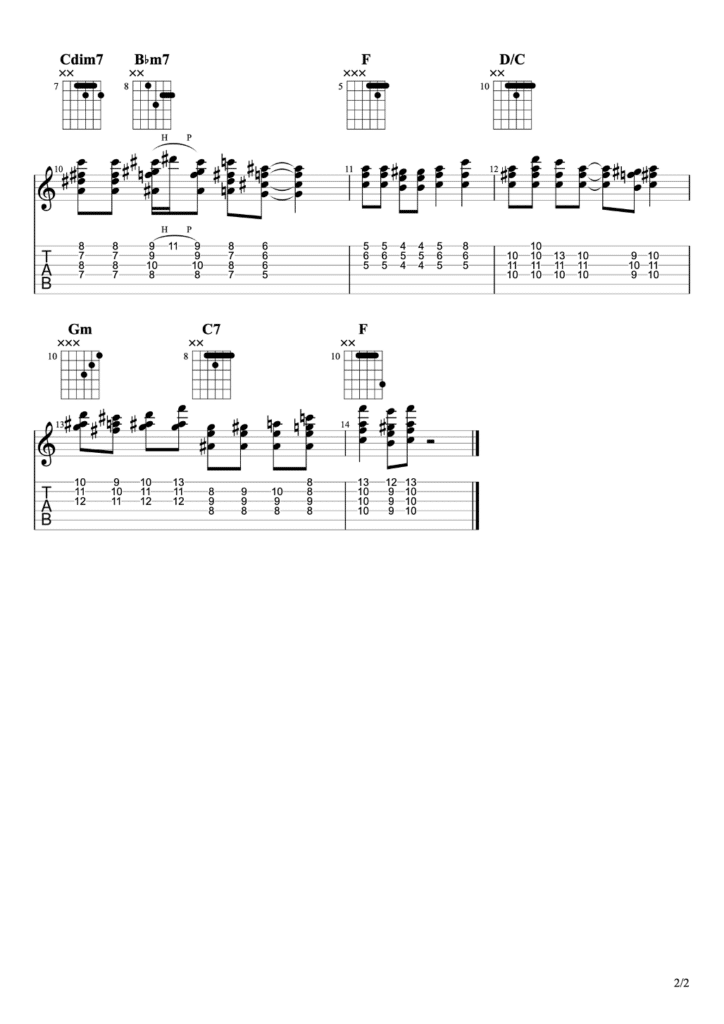
Chord Soloing
Allan Reuss was a student by George van Eps. He also played in Benny Goodmans band. He was a master of playing excellent chord solos in the early swing music style. His ideas recall of the brass sections of this era. Allan Reuss used simple inversions of triads and so-called „drop2 Voicings“ – Inversions of 4note voicings where the second note is dropped in the bass. I will show you his most common voicings. He used these voicings as a basement to add other notes with the other available fingers of his fret hand.
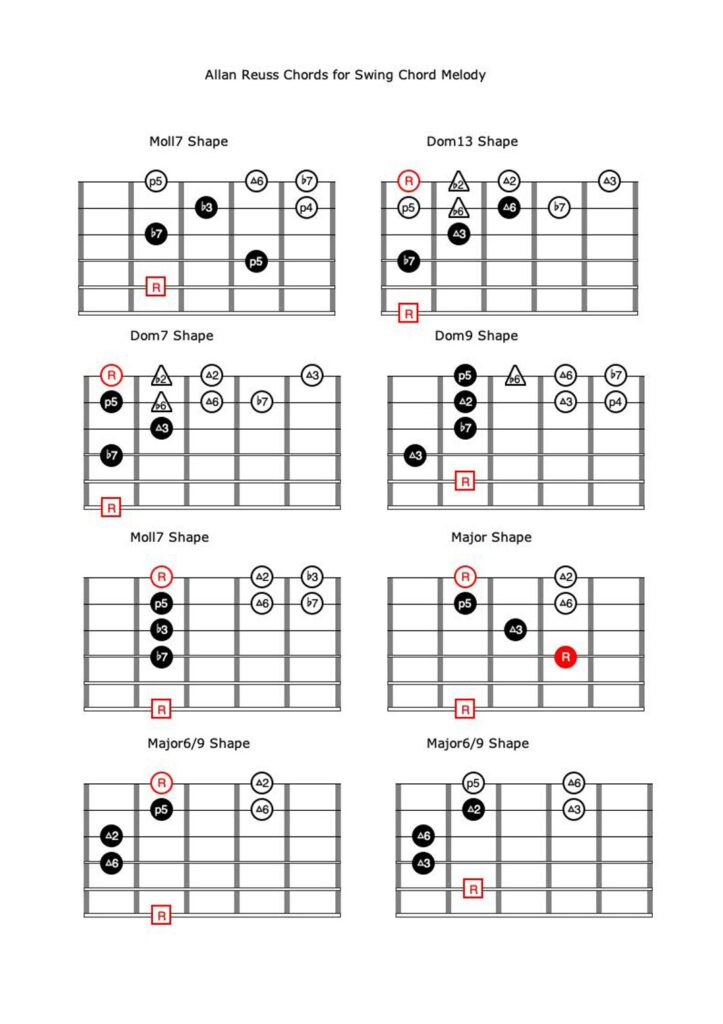
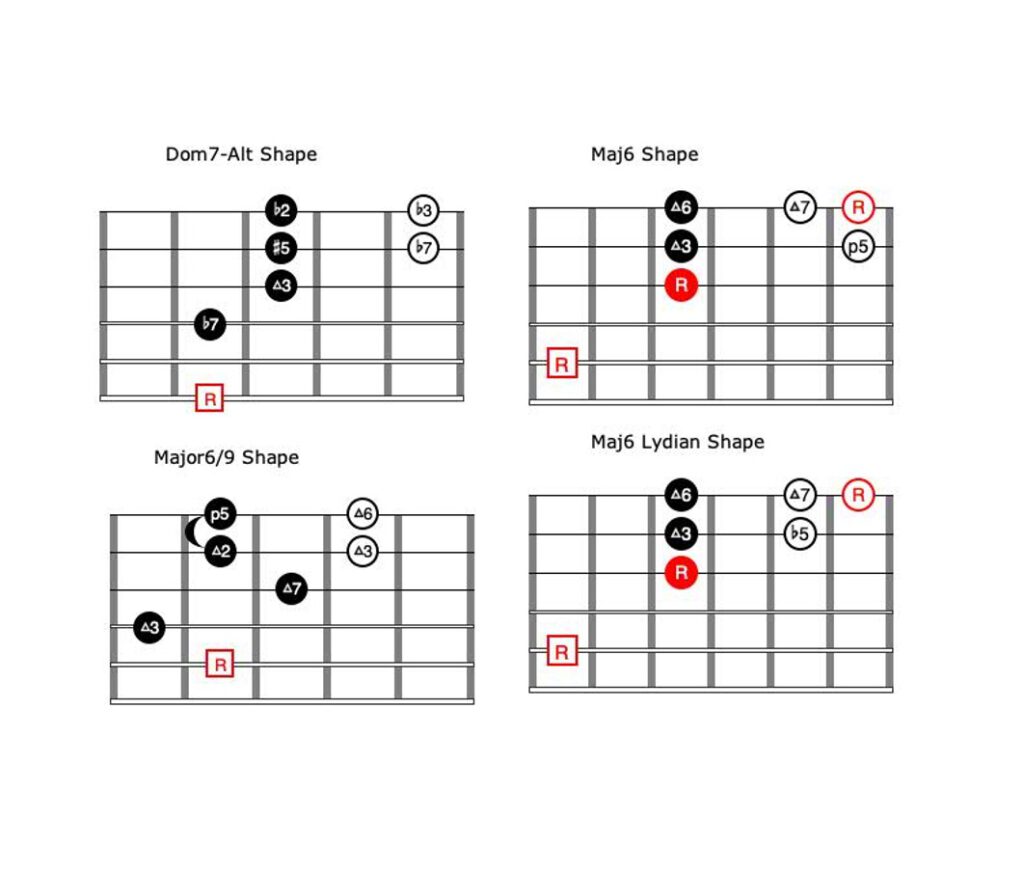
In the next tune, I show you an example of how you can use the Allan Reuss Voicings in context.
Swing for Allan