bluegrasscourse
LEarn to play Bluegrass
In this course we will take a look on the famous common tune “Bill Cheatham”
You will learn many different techniques to master comping and soloing over fiddle tunes.
Introduction
Bluegrass music is not as old as most people think. It’s true that many influences came from Irish immigrants in the 19th century, but the characteristic fusion of blues, Irish folk, gospel, and swing emerged in the 1940s with musicians like Bill Monroe, Lester Flatt, and Earl Scruggs.
Today, people come together to play these tunes at jam sessions and festivals. In this course, we want to prepare you to gain a solid footing in bluegrass so that you are able to join a spontaneous bluegrass jam session.
A great vehicle for this is the well-known tune Bill Cheatham. We will take a look at how to comp a tune like this, how to play the melody at both slow and fast tempos, and how to design a solo for your break.
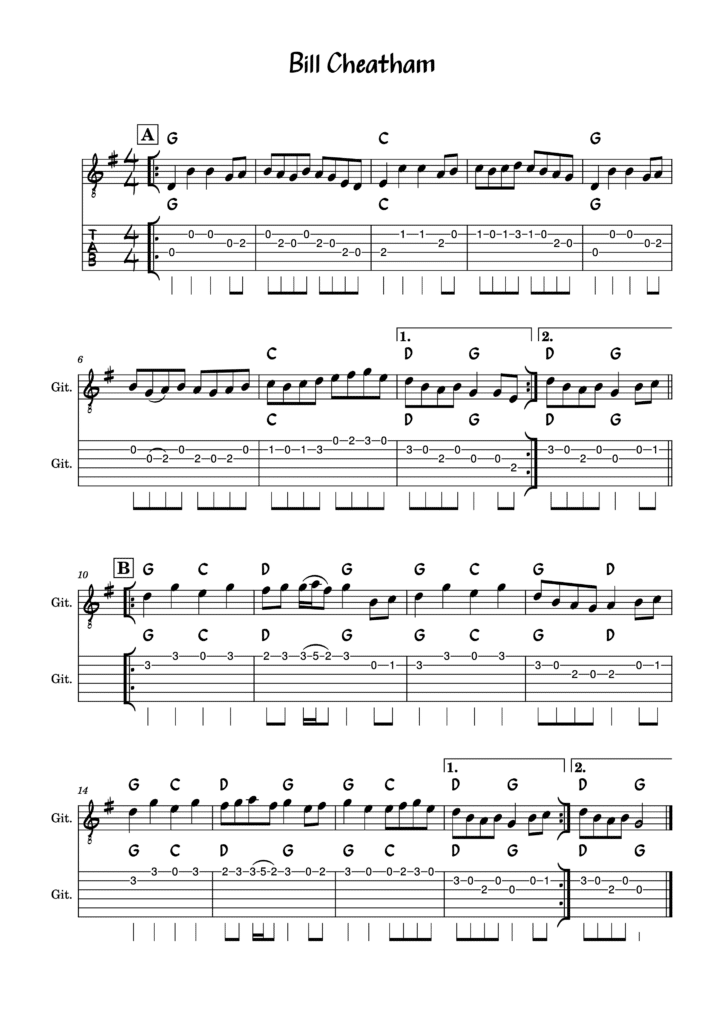
Let’s first take a look at our notation and tabs—we will go into more detail right away.
Swing in Bluegrass
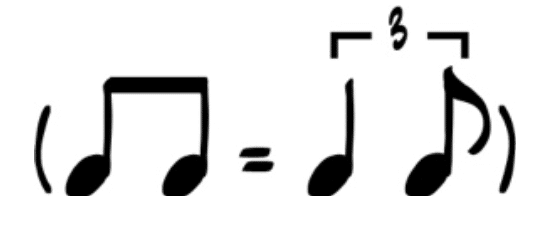
For me, there has always been a strong influence of blues and jazz in bluegrass music. A typical example of this is the use of swing feel or shuffle feel in bluegrass.
Keep in mind that phrasing in bluegrass is not strictly straight. We also have a triplet-based feel in the microtiming, similar to swing music. The first eighth note is slightly longer than the second eighth note.
Where are the original melodies?
This is a very important point and one of the key differences compared to many other musical styles. In classical music, we know famous composers who wrote many fully notated compositions. Jazz music is often connected to older but well-known Broadway productions—there, too, it can be difficult to say what the “correct” melody or original theme is, since we can find many different interpretations of classic swing tunes.
In bluegrass, things are even more complex. Many of the old melodies and fiddle tunes, passed down over hundreds of years, were transmitted orally and were not written down by a single original composer. As a result, you will find many different versions of the melody of a tune. Some are very advanced, while others are quite simple. Even simple children’s songs can become highly virtuosic pieces through the interpretation of great bluegrass musicians. Especially in your early years, it is often a good idea to simplify a version you’ve found rather than make it more complex or add extra material.
Carter Style Comping
Maybelle Carter was a great and influential musician who developed a distinctive style of guitar playing in the 1920s.
The idea is to combine bassline picking with the higher strings of the guitar, rather than simply strumming all the strings. She preferred to play the bass strings on the strong beats and the higher strings on the offbeats.
Instead of playing only the root note, she alternated between the root and the fifth, and also incorporated other bass notes while maintaining a steady groove.
After a little while, you will become comfortable with this style of strumming. Try to avoid heavy, full strumming across all the strings, as this can ruin the overall band sound. We want to leave space for the mandolin and the bass. The mandolin provides the “chuck,” the bass provides the foundation, and we aim to fill in the harmony.
The A Part Melody
Once you are comfortable with comping, you can start learning a version of the A part of the fiddle tune melody of Bill Cheatham.
The B Part Melody
Most fiddle tunes are structured in an A part and a B part. Each part is usually repeated and also serves as the foundation for solo breaks.
This arrangement includes nicely outlined harmonies, which can become challenging at faster tempos (something we will discuss in the next chapter).
Simplifying the melody
As the tempo increases, complex melodic outlines can become difficult to play. It is very common for bluegrass musicians to use different variations of a melody or to improvise around its basic structure. You can emphasize the important melody notes on the strong beats (1 and 3) to keep the melody recognizable while giving yourself the freedom to vary it.
In the following example, the A and B parts of the tune are played at a very fast tempo. The A part can still be played as before, but the B part becomes too fast to include all the arpeggiated notes. In this case, I remove some notes and keep only the most important ones for the B part.
The Solo Break
When a bluegrass musician plays a solo, we call it a “break” or “solo break.” In the following examples, I will show you the fundamental elements that shape the sound of a bluegrass solo.
In my example video, you can see the chord changes while I am improvising. This is a very important aspect of bluegrass playing. Improvisation is often closely tied to the underlying chords. The A part is a perfect example of chord-based bluegrass playing: the chords do not change quickly. We have two bars of G major, two bars of C major, two bars of G major, one bar of C major, and a short V–I turnaround at the end of the form—giving us plenty of time to clearly outline each chord.
Outlining the G-Chord
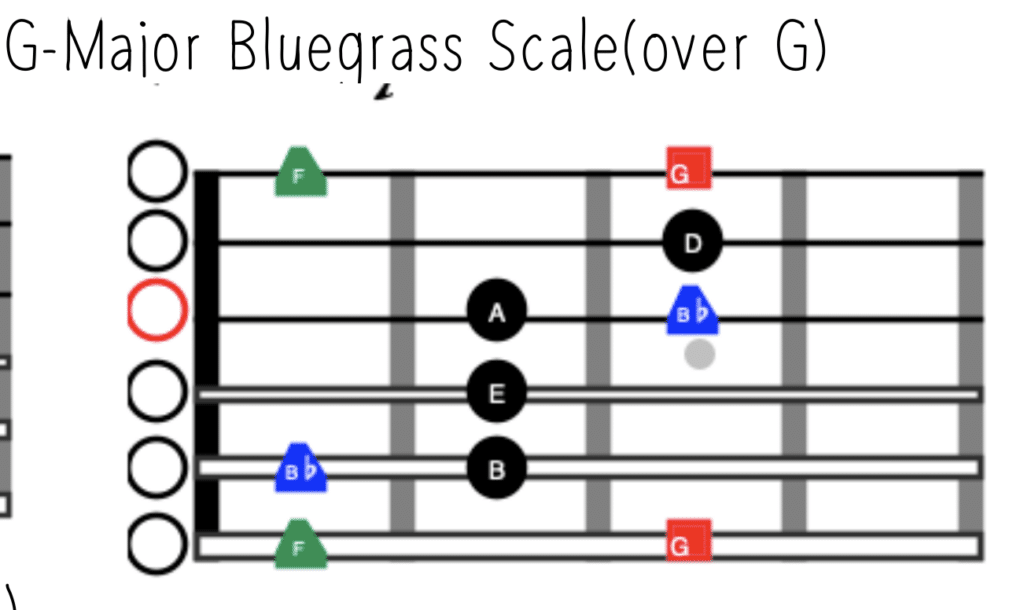
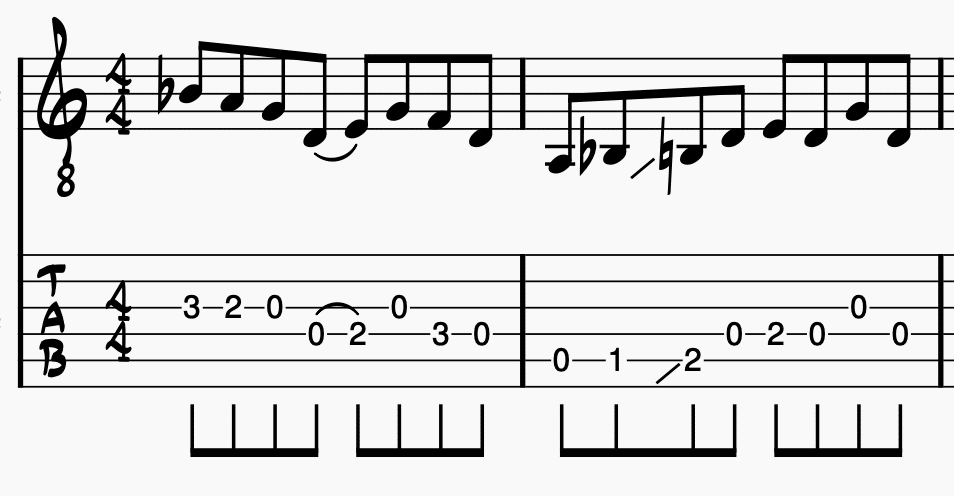
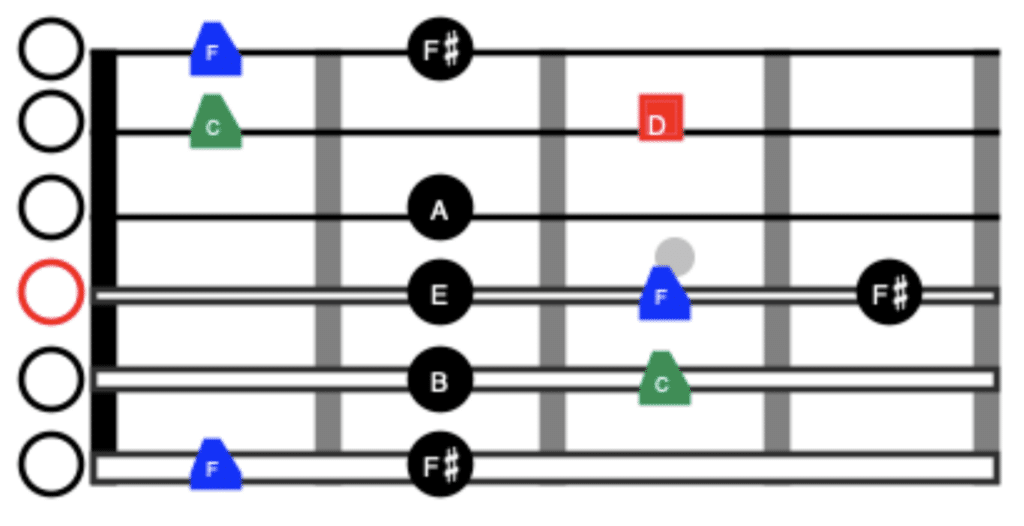
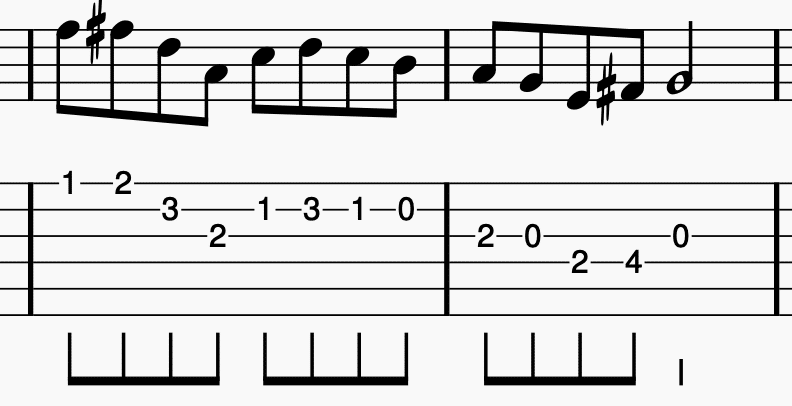
Maybe you already know the G major pentatonic scale in open position. This forms the foundation of our improvisation over the G major root chord. In bluegrass, however, we often add two extra notes—especially over the I chord. The B♭ is the minor third of G and is commonly referred to as the “blue note.” Another added note comes from the connection to blues and the idea of combining major and minor pentatonics, giving us a slightly dominant, bluesy sound: the F (the ♭7, or minor seventh).
Keep in mind that this extra notes are more connecting notes which are not played without any resolving to a consonant pentatonic note (black notes)
Outlining the C-Chord
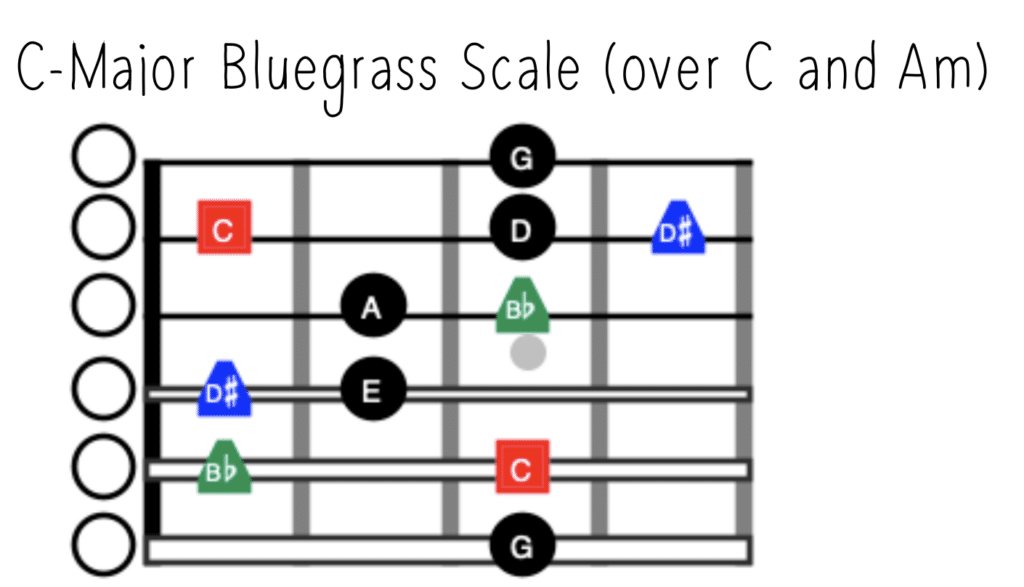
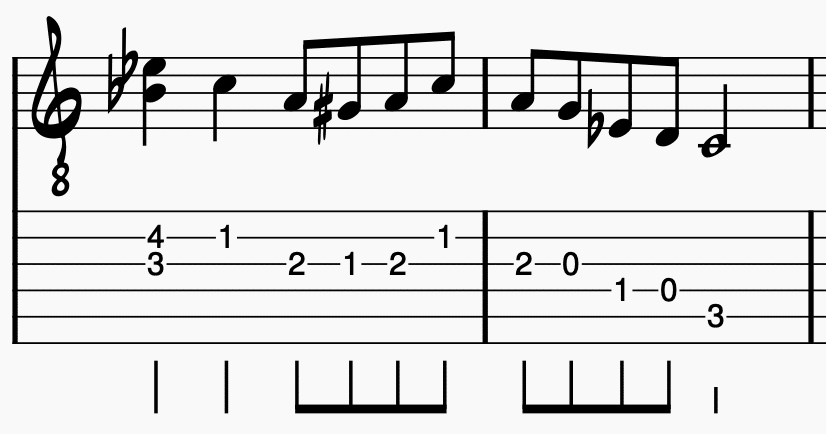
To outline the IV chord (C major), we can simply use the C major pentatonic scale, optionally adding the ♭3 and ♭7 for extra blues flavor. This type of scale is also known as the “country scale” or “soul scale.”
Outlining the D7-Chord
Now let’s look at the V chord. D7 is the dominant chord in this tune. In general, we could use a D major bluegrass scale, but for a dominant chord, it makes sense to approach it slightly differently. The chord name already tells us that the ♭7 is an essential tone and one of the defining sounds of a dominant 7 chord. Therefore, it makes sense to emphasize this note more strongly. It is absolutely fine—and sounds great—to place the ♭7 (C) on strong beats. It also serves as an important guide tone leading back to the third of the G major chord.
Soloing over the B-Section
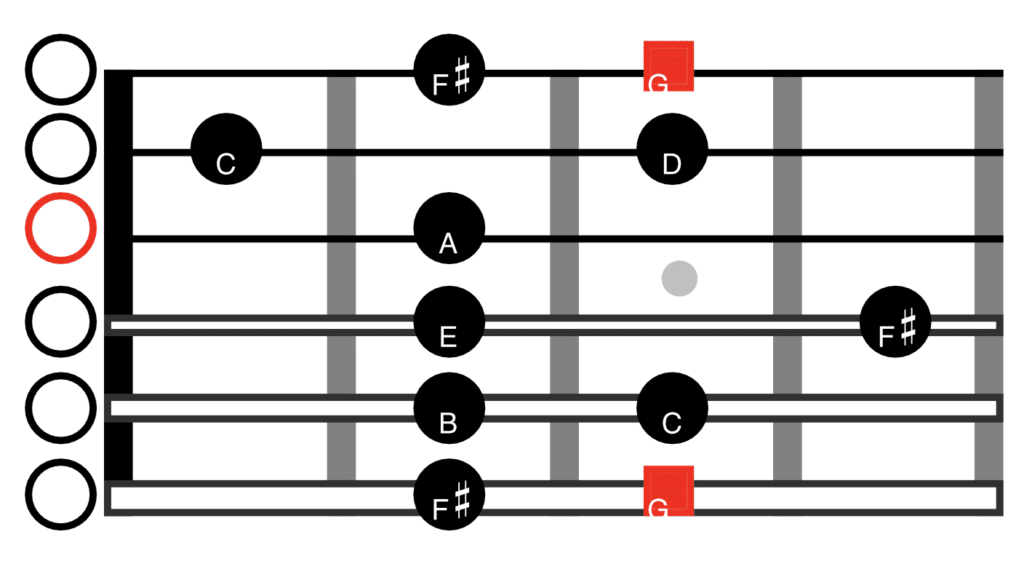
I hope you didn’t try to solo over the B part using this concept alone.
Similar to many other musical styles, when chord changes happen very quickly, it is often not the best idea to outline every single chord in detail. Instead, try to focus on the G major scale. Once you feel comfortable, you can expand into other positions and explore more of the fretboard.
Using chromatic notes
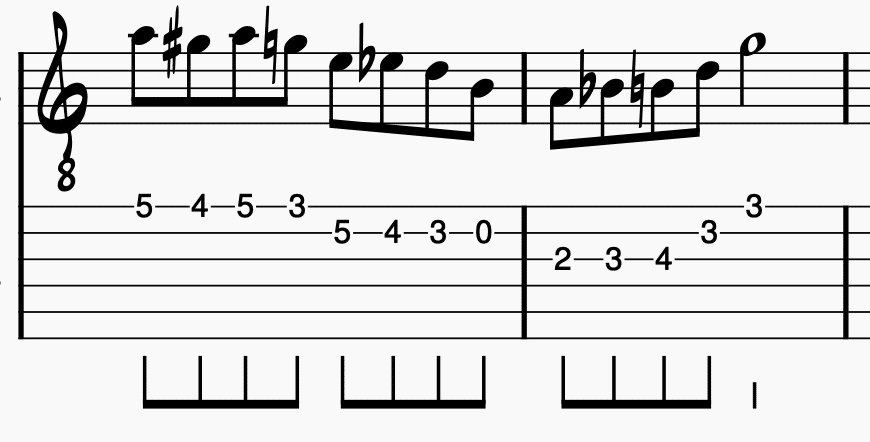
Wait—are we switching to a jazz lesson? Not really. Bluegrass also makes use of chromatic notes to connect stable tones, much like in jazz. The main difference is that bluegrass typically stays closer to the key center, whereas modern jazz often ventures further “outside.”
In certain situations, you can approach a target note chromatically from above or below. A useful trick is to place these chromatic notes on the upbeat, resolving them on the downbeat.
Using double-stops
First of all—what is a double stop?
A double stop simply means playing two notes at the same time.
In country and bluegrass, it is very common to combine a stable chord tone with a bluesy note. This creates a rich and sometimes unexpected sound.
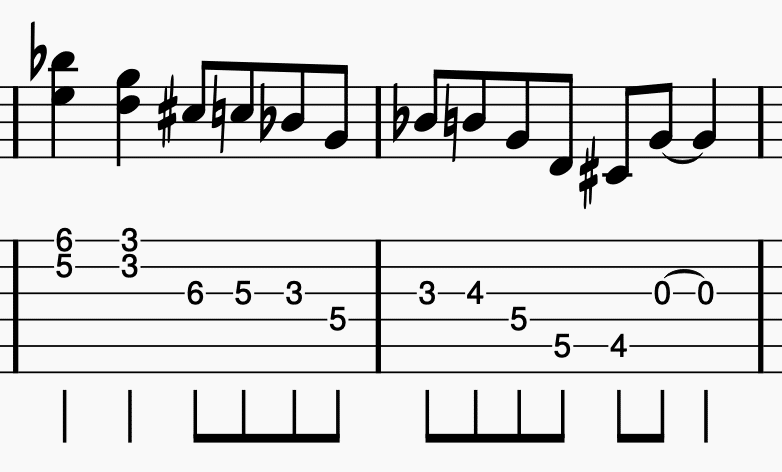
Using Banjo-Rolls
Wait a second—aren’t we learning guitar?
The guitar has adopted many techniques from other instruments such as the banjo, bass, and violin. One characteristic banjo technique is the use of so-called “rolls.” A roll is typically a repeating three-note picking pattern played over a chord, with optional added notes.
Banjo rolls are especially appealing because they create a polyrhythmic feel—three notes repeating over a 4/4 meter. It’s like a waltz pattern (groups of three) moving through a 4/4 groove.
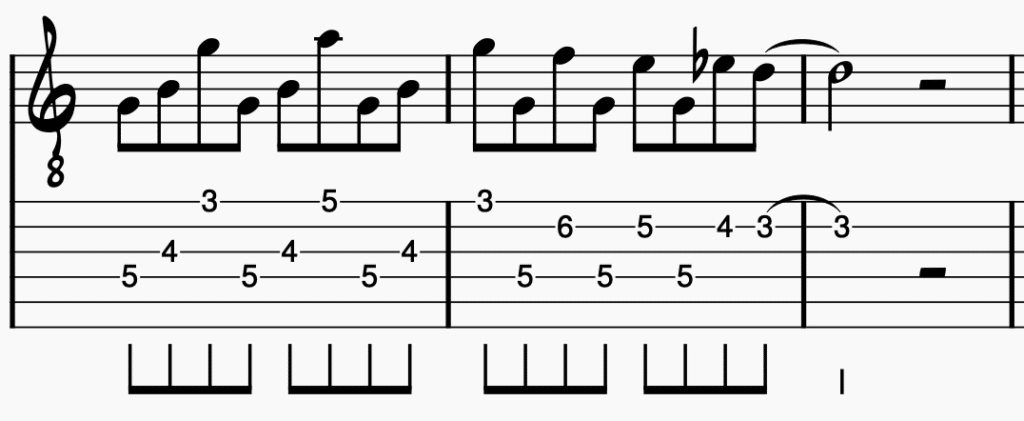
Example Solo
If you would like to read tablature, I recommend checking out the version provided below the audio player.
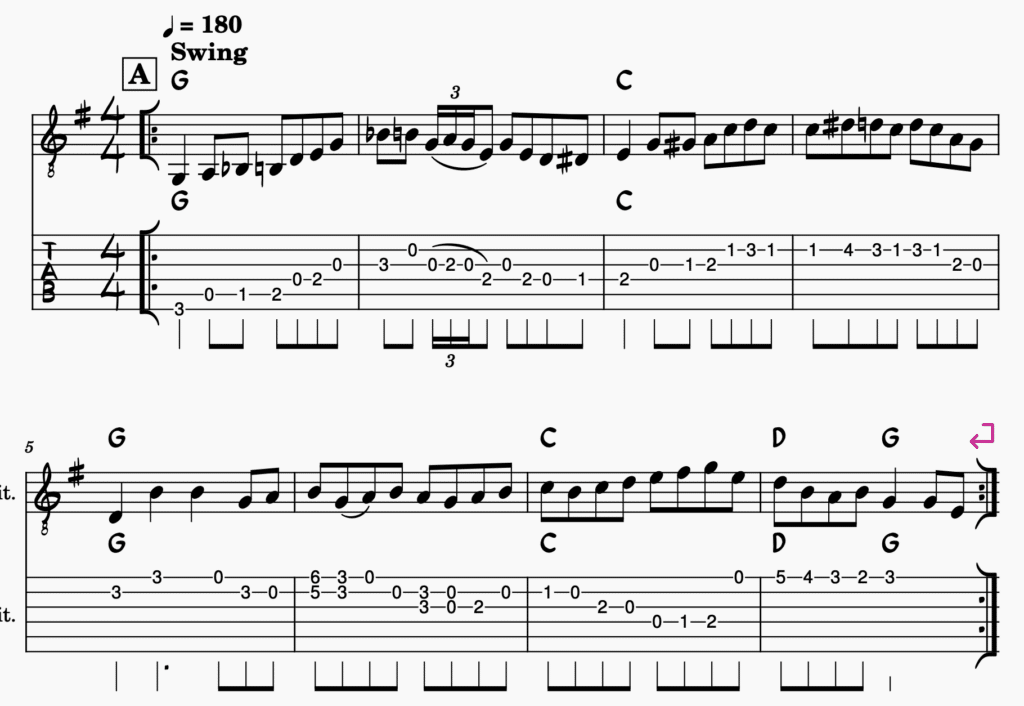
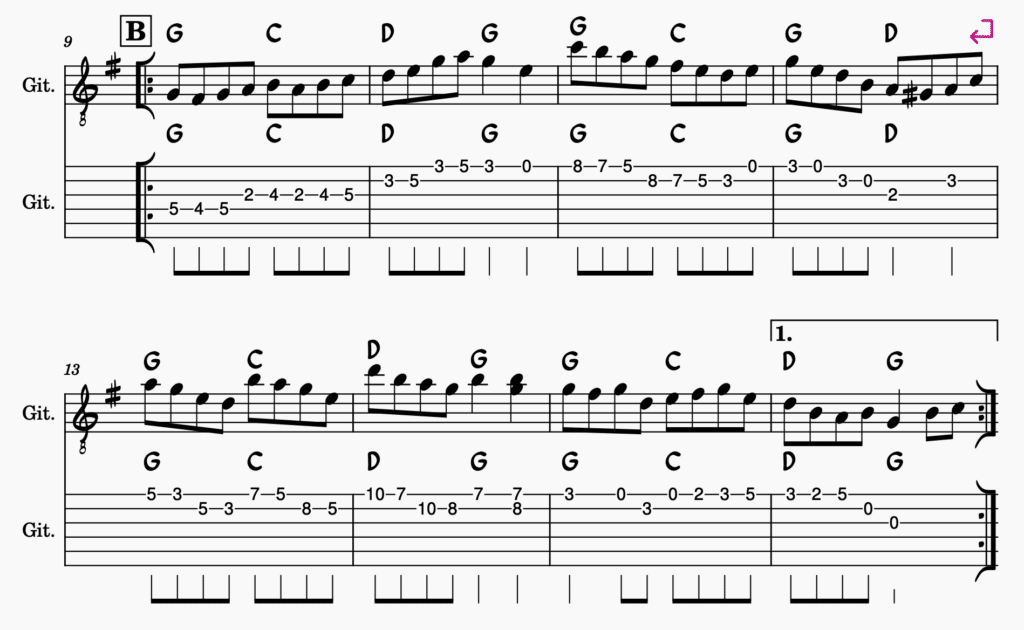
Let’s Jam
Congratulations—you worked through a lot of information, and now it’s time to apply your new knowledge. The following video is a backing track of Bill Cheatham. Keep in mind that the visual chords are in the key of G, but we are hearing it in the key of A (Capo II). Feel free to use the youtube slow-downer function to slow down or speeding up the video.