

Join my Guitar online Courses in English language
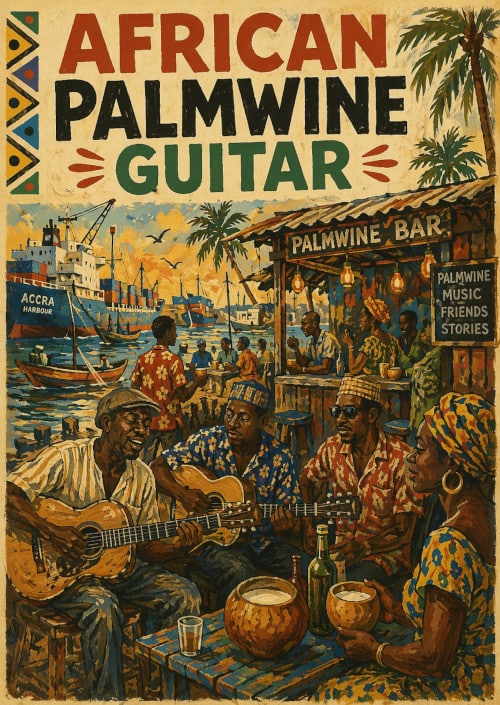
Let’s dive into the musical world of Ghana and other countries of West-Africa.
We will take a look at the Music and Guitar-Style of the Palmwine Music of West-Africa, which includes many different playing techniques and an unbelievable sense of rhythm, which will show you a whole new world of musical possibilities…
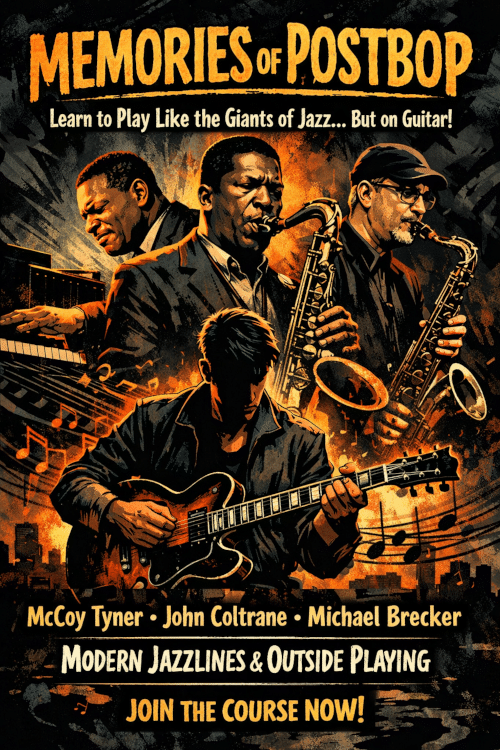
if you want to be able to understand the art form of postbop or contemporary jazz music, you have to understand what came before this kind of jazz music was invented.
The information in this book is based on the information you are getting out of my „Quickguide to creating bebop lines“ book. The playing techniques of bebop give you the skills you need, to extend your musical ideas to the contemporary jazz sound you are looking for.
Bebop was a masterful artform where Players like Dizzie Gillespie, Charlie Parker, and Art Tatum outline the harmonies like detailed sketches.
Mc Coy Tyner and John Coltrane started a new kind of sound era, where the players threw strong colors on the canvas of music and extend or simplify the harmony in many directions to create new strong but also clear outside sounds.
The use of pentatonic, triads, and combinations out of this material, gave them the tools or the vehicle to went so far away or create these new sounds.
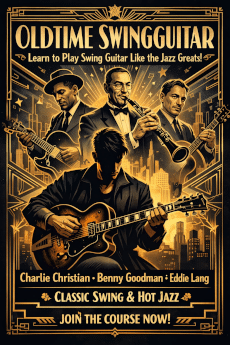
Start from the beginning of jazz-guitar. We will take a closer look to players like Eddie Lang, Dick MC Donough, Allan Reuss and Charlie Christian
Surprisingly, most guitar player who wants to discover the world of jazz starting in the era of the 50s, 60s, or much later. Players like Wes Montgomery, Joe Pass, George Benson, Pat Metheny, and many more are more well known as players like Carl Kress, Freddie Green, Dick McDonough, Eddie Lang, Charlie Christian or Nick Lucas. But apart from that, the music of these jazz roots players is just as beautiful as later players and is a great source for inspiration. ..
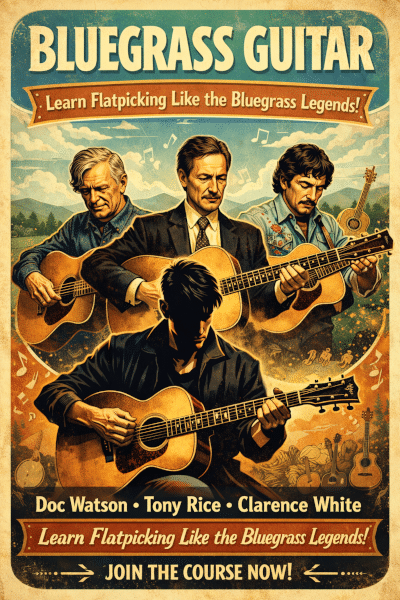
Today, people come together to play these tunes at jam sessions and festivals. In this course, we want to prepare you to gain a solid footing in bluegrass so that you are able to join a spontaneous bluegrass jam session.
A great vehicle for this is the well-known tune Bill Cheatham. We will take a look at how to comp a tune like this, how to play the melody at both slow and fast tempos, and how to design a solo for your break…
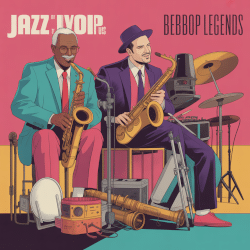
Bebop were the time when Jazz went away from just dance-music to an artform
Learn about Bebop-Phrasing, Chromatic-Enclosures, the Bebop Scale and so on…